UpTrajectory Review
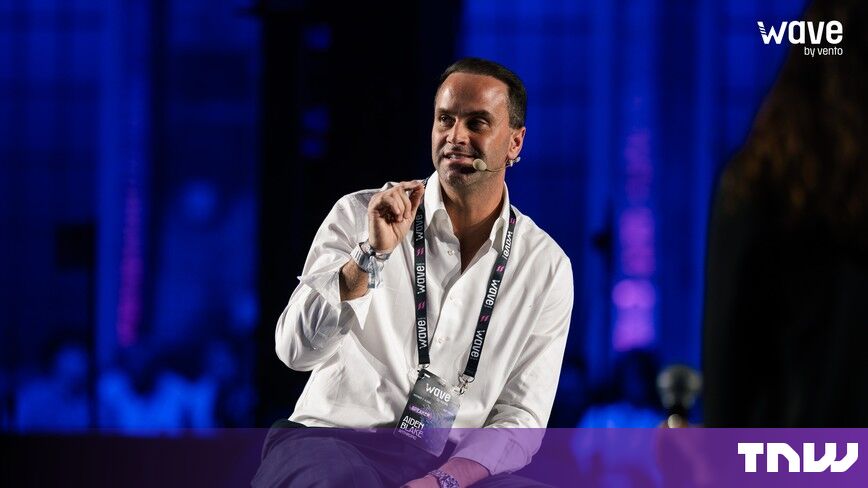
The Next Web reports from Wave by Vento in Turin, where Station F director Roxanne Varza and Anthropic's Aiden Blake described an unexpected reversal: even as AI tools make remote company-building more feasible than ever, startup founders are actively choosing to work in person, side by side. The trend is visible at Station F, the massive Paris startup campus Varza runs, where attendance has been climbing since the AI wave began. The logic is counterintuitive on its face — if a small team can now code, design, and ship product from anywhere, why lease desks? — but the panelists argue that the velocity of AI development makes physical proximity more valuable, not less, because iteration speed and shared context become the scarcest resources.
For a small-business operator, this cuts against years of received wisdom about distributed teams and async work. The practical implication is not that every bakery or consultancy needs to recall staff to an office, but that the calculus for knowledge-intensive work has shifted. If founders building AI-native products — the people with the least attachment to legacy workflows — are concluding that face time accelerates decision-making, that is a signal worth weighing against the cost savings of remote work. It also matters for anyone who rents coworking space or runs one: demand from AI-adjacent founders may be a genuine growth pocket, and the community-building pitch carries more weight than the desk-rental pitch.
What is genuinely new here is the framing of in-person work as an AI-era advantage rather than a pandemic-era relic. Varza and Blake are not alone in observing this — Y Combinator has publicly nudged batches toward colocation, and several prominent AI labs have quietly tightened return-to-office expectations — but the Turin panel puts a European institutional voice behind the trend. We are somewhat skeptical of how far the observation generalizes: Station F is a curated, subsidized ecosystem with its own gravitational pull, and founders at a Vento-run conference may overrepresent the socially inclined. Still, the direction of travel is consistent enough across accelerators and AI hubs that it deserves attention rather than dismissal.
The second-order effects are worth thinking through. If AI startups cluster physically, talent concentration in a handful of hubs — Paris, London, San Francisco, Turin itself — intensifies, and smaller cities risk losing the founder pipeline they worked to build. Coworking operators who survived the remote-work shakeout may find a durable niche serving AI teams that want flexibility without isolation. There is also a hiring implication: founders who colocate may skew toward local or relocation-friendly candidates, which narrows access for caregivers, disabled workers, and anyone outside a major metro. The cost of that tradeoff rarely surfaces in panel discussions, but it will surface in who gets to build the next wave of companies.
Watch whether this trend shows up in lease data and accelerator policies over the next two quarters. If Station F publishes occupancy figures and they keep climbing, that is harder evidence than panel anecdotes. Operators should also listen for how Anthropic and peer labs structure their own teams — they are, in effect, running the experiments everyone else will copy. If you run a business and are weighing remote versus in-person, the actionable question is not which is better in the abstract but whether your work benefits from the rapid, unstructured iteration that founders say colocation enables. Test it with a defined trial, measure output, and let the result rather than the headline decide.
“AI makes it possible to build a company from anywhere, but founders are still choosing to sit together” — The Next Web
Takeaway: If AI-native founders are choosing colocation for speed, weigh face-to-face iteration gains against remote flexibility for your own team — and test rather than assume.
Excerpt from the original — The Next Web
AI makes it possible to build a company from anywhere, but founders are still choosing to sit together, Station F director Roxanne Varza and Anthropic’s Aiden Blake said. They spoke on a panel at Wave by Vento in Turin on Thursday. “What’s really interesting is we’re seeing more and more people coming since the ‘AI […]
This story continues at The Next Web …