UpTrajectory Review
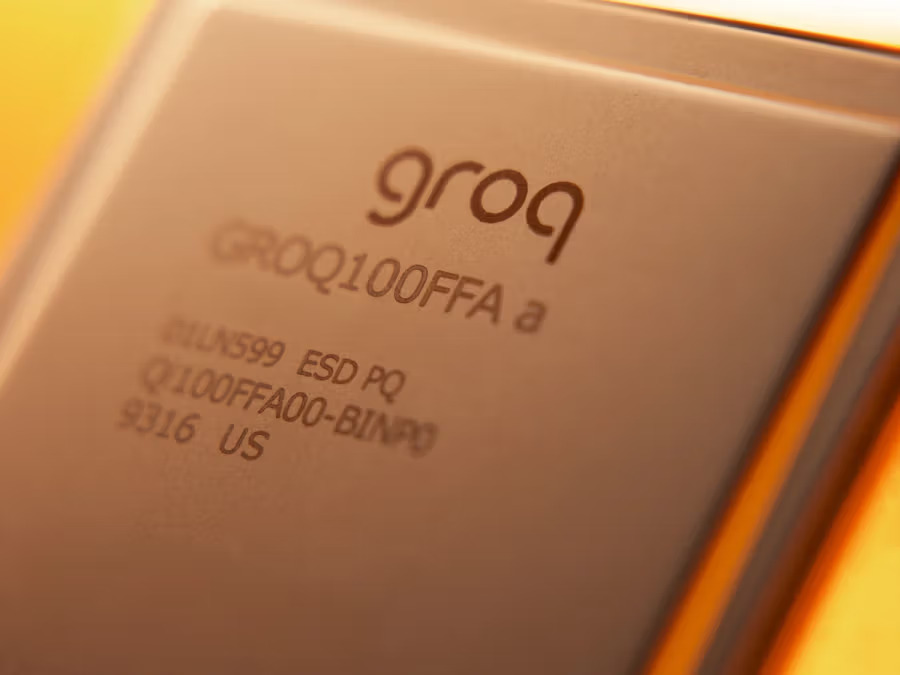
Groq, a startup building specialized chips for running AI models, has pulled in $350 million in fresh Series A funding led by existing investor Disruptive, with Nvidia signaling intent to join the round later. The announcement arrives roughly a year after Groq's last major capital raise and positions the company as one of the more credible challengers to Nvidia's own dominance in AI inference—the actual running of trained models, not just their creation. For small-business operators watching the AI infrastructure landscape, this matters because inference costs increasingly determine whether AI tools are affordable enough to deploy at scale.
The Nvidia angle deserves particular attention. When the market leader in AI chips invests in a would-be competitor, the dynamic is rarely straightforward collaboration. Nvidia may be hedging against antitrust scrutiny by cultivating apparent competition, or it may see Groq's tensor streaming processor architecture as complementary rather than threatening—Groq chips excel at low-latency inference for specific model types, not the general-purpose training workloads where Nvidia's H100 and Blackwell chips dominate. For businesses renting AI compute, this funding round likely means Groq survives another eighteen months to compete on price, which puts downward pressure on cloud inference costs across providers.
What is genuinely contested here is whether Groq's technical approach can scale economically. The company has generated genuine enthusiasm for its speed demonstrations, particularly with open-source language models, but has faced skepticism about manufacturing costs and memory limitations that constrain which models run efficiently on its hardware. The source text's truncated reference to timing—'less than' something—likely points to the compressed fundraising cycle, which suggests either voracious investor appetite for AI chip alternatives or Groq burning through capital faster than planned. We are skeptical of any Nvidia investment amount left unspecified; such vagueness often precedes a modest check that functions more as market signaling than genuine strategic commitment.
Downstream effects split unevenly across the AI economy. Cloud providers like Amazon, Google, and Microsoft gain leverage in chip negotiations when viable alternatives emerge, even niche ones. Software startups building on open-source models see potential relief from inference pricing, though Groq's current cloud availability remains limited compared to hyperscaler reach. The more concerning prospect for small operators: if Nvidia's eventual stake comes with preferential supply arrangements or technical integration requirements, Groq could become another funnel back to Nvidia's ecosystem rather than a genuine competitive force. Hardware startups that took alternative approaches—Cerebras, SambaNova, Graphcore—face renewed pressure to demonstrate similar investor traction or risk being stranded as the market consolidates around a few funded players.
Watch whether Nvidia actually closes its investment and at what valuation relative to this round. A significant down-round participation would signal due diligence concerns; a premium would suggest strategic blocking intent. For operators currently using AI APIs, test Groq's inference pricing against your existing provider—its compiler requires model-specific optimization, so the savings are not automatic. More broadly, this funding cycle confirms that AI infrastructure remains a capital-intensive arms race where small players depend on large investors' continued appetite for risk. The businesses that benefit most will be those architecting their AI usage to remain portable across chip architectures, not locked into any single provider's technical choices.
Takeaway: Test Groq's inference pricing against your current AI API costs, but architect your systems to stay portable across chip providers.
Excerpt from the original — SiliconAngle
Artificial intelligence startup Groq Inc. today announced that it has raised $350 million in additional funding. The Series A round was led by returning backer Disruptive. Grok stated that Nvidia Corp. plans to join the round later down the line, but didn’t specify how much the chip giant will invest. The cash infusion comes less […]
The post AI cloud operator Groq raises $350M more in funding appeared first on SiliconANGLE.