UpTrajectory Review
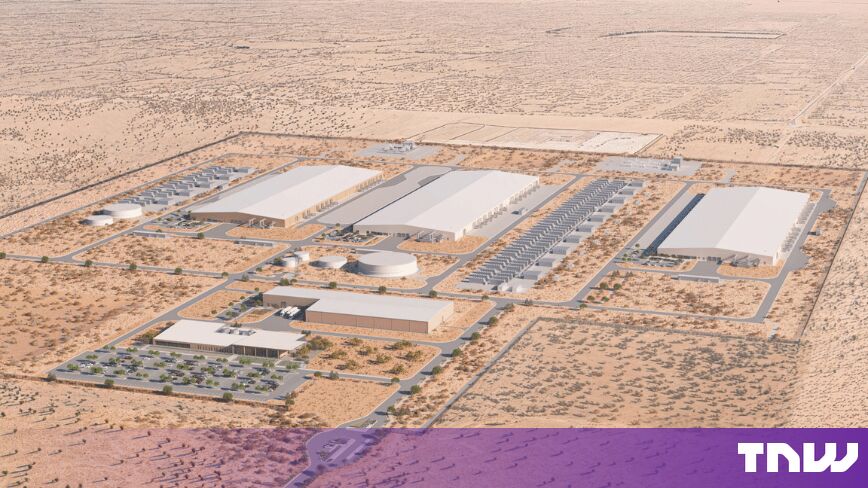
Cornell researchers have produced a striking new estimate: the wave of planned U.S. data centers powering generative AI could emit carbon dioxide equivalent to 24 million automobiles. The study has already ricocheted across tech media, giving fresh ammunition to critics who argue that AI's environmental ledger is being systematically understated. What makes this figure politically potent is its accessibility—most people grasp what 24 million cars means in a way they do not grasp gigawatt-hours or megatonnes of CO2. The study lands at a moment when hyperscalers like Microsoft, Google, and Amazon are racing to lock down power contracts for facilities that can each draw more electricity than a mid-sized city, and when local communities from Phoenix to Northern Virginia are already choking on the infrastructure demands.
For small-business operators, the temptation is to file this under 'Big Tech's problem' and move on. That would be a mistake. The energy economics of AI are not staying confined to the server farm. Cloud providers are already beginning to pass through power costs and carbon-compliance expenses in revised pricing tiers, and the businesses most dependent on AI APIs—marketing agencies using generative copy tools, law firms running document review, manufacturers deploying predictive maintenance—will face margin compression they did not model. More immediately, any small business in a market where these data centers are proposed should expect strained electrical grids, delayed utility interconnections for their own facilities, and potentially volatile local power rates. The boom is not abstract; it is a land-use and infrastructure event happening in specific places, with specific congestion effects.
What deserves skepticism here is the study's transit from academic finding to viral headline. The 24-million-cars equivalence is almost certainly a lifecycle or cumulative projection, not an annual figure, but that distinction has already been flattened in circulation. We should also press on what the study actually measured: planned data centers, not operating ones, which introduces speculative variables about construction timelines, utilization rates, and whether all permitted facilities get built. The AI industry has a pattern of announcing capacity that outruns deployment. That said, the directional signal is credible. The International Energy Agency and multiple grid operators have independently warned that AI-driven load growth is outpacing renewable additions in key markets. Cornell's contribution is less the number itself than the framing that makes it politically legible.
The distributional consequences here are worth tracking. Large enterprises with dedicated sustainability staff and long-term renewable power purchase agreements can buffer against carbon pricing and reputational risk. Small businesses cannot. They will face a two-tiered market: enterprise customers who can afford 'green AI' premiums and everyone else who gets whatever mix of grid power the cheapest provider serves. There is also a geographic asymmetry. Rural communities courted with tax breaks for data center campuses may see property tax base growth, but they will also absorb the water consumption, the transmission line battles, and the stranded-asset risk if AI demand curves flatten. The businesses already in those communities—agriculture, light manufacturing, tourism—did not ask to become collateral in a cloud computing land rush.
Watch three developments in particular. First, whether state public utility commissions begin rejecting data center ratepayer deals that socialize infrastructure costs across residential and small-commercial customers; this is already contested in Virginia and Oregon. Second, whether cloud providers introduce carbon-labeled API pricing that lets small businesses make informed tradeoffs, or whether they bury the externality. Third, whether Congress extends or modifies the Inflation Reduction Act's clean-energy credits in ways that accelerate grid decarbonization fast enough to outrun AI load growth. For operators, the actionable move is to audit your AI dependencies now: which tools, which providers, which regions, and what their disclosed or estimated carbon intensities are. The businesses that map this exposure before it becomes a line item will have negotiating leverage and substitution options that laggards will not.
The Cornell study ultimately functions as a stress test for a narrative the AI industry has controlled too comfortably—that efficiency gains in model training and inference will outpace demand growth, that Moore's Law analogues apply to energy as well as transistors. The evidence is tilting the other way. Jevons paradox, the economic observation that efficiency gains often increase total resource consumption, is not a law of nature, but it is a reliable pattern in digital infrastructure. Small businesses do not need to become climate activists to protect their interests here. They need to become numerate about where their AI tools live, what they cost to power, and who will pay when the bill comes due. The 24-million-cars figure is a headline. The rate case in your local utility commission docket is where the arithmetic gets personal.
Takeaway: Audit your AI tools' providers and regional power sources now—carbon costs are becoming pricing costs, and small businesses lack the buffers that enterprises have.
Excerpt from the original — The Next Web
A new study out of Cornell has handed the AI industry’s climate critics a fresh statistic to wield, and the internet has duly rounded it up. Planned US data centres, one widely shared headline announced, are set to produce as much carbon dioxide as 24 million cars. The figure is arresting. It is also a […]
This story continues at The Next Web …