UpTrajectory Review
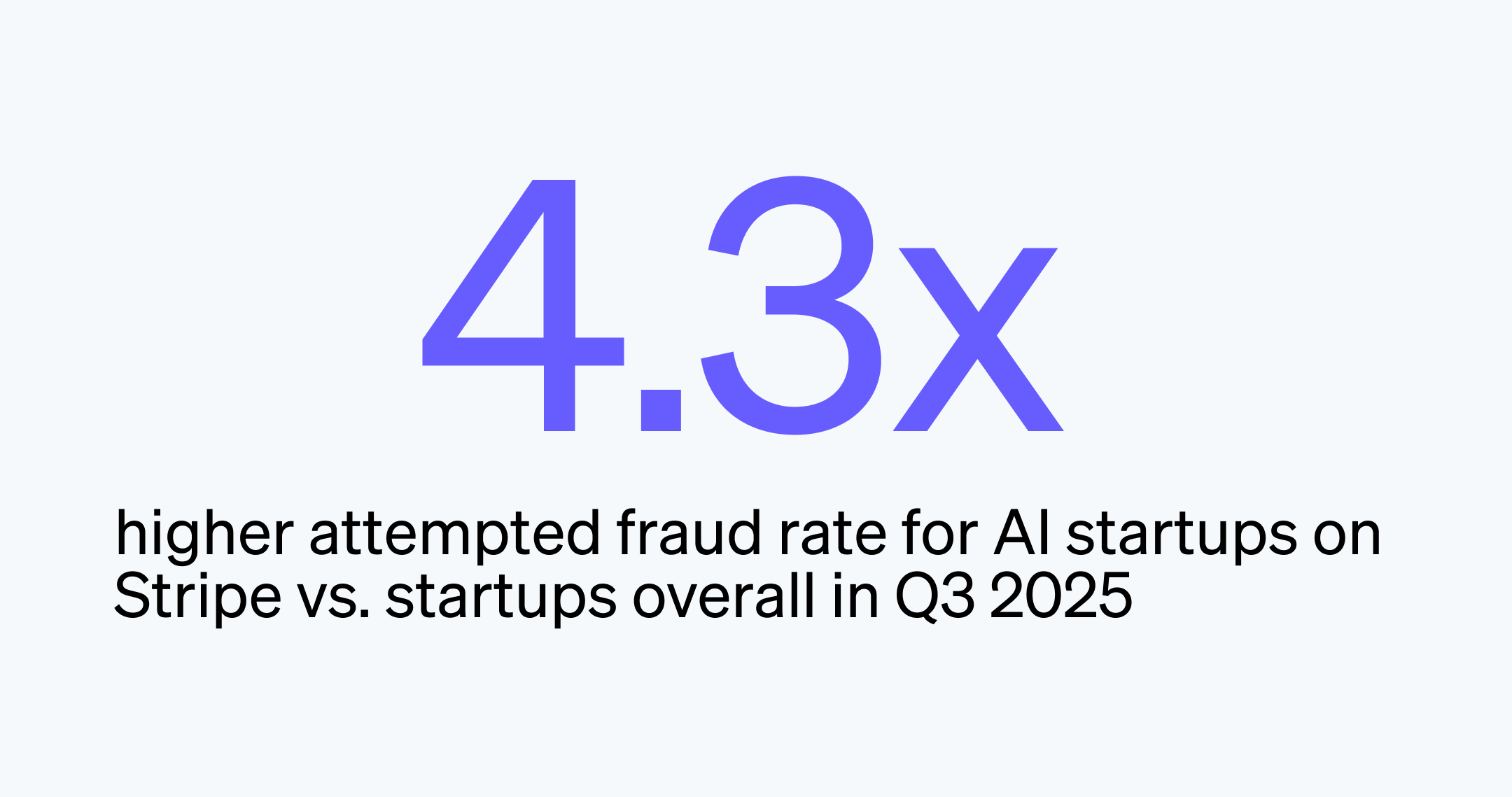
Stripe's internal data reveals a striking vulnerability in one of the economy's most celebrated sectors: AI startups are now facing fraud attempts at more than four times the rate of the broader startup population. This is not a marginal concern or a footnote in quarterly earnings. It is a structural asymmetry that suggests the very tools these companies build—automated systems, scalable platforms, rapid onboarding—are being weaponized against them. Stripe's analysis, drawn from its massive payment-processing footprint, captures attempted fraud and customer abuse patterns through Q3 2025, a period when AI investment remained robust even as skepticism about business models deepened. The finding lands differently than generic cybersecurity warnings because it comes from transaction-level data, not survey self-reporting.
For small-business operators outside the AI bubble, this matters in three concrete ways. First, if you sell to AI companies or depend on them as customers, their fraud exposure becomes your counterparty risk—chargebacks, payment disputes, and sudden account freezes ripple through vendor relationships. Second, the tactics honed against AI startups migrate quickly. Synthetic identity fraud, credential stuffing, and abuse of free-tier onboarding were pioneered at scale against tech platforms before spreading to e-commerce, professional services, and local retail. Third, Stripe's data suggests these startups are underinvesting in fraud prevention relative to their actual exposure, which means the competitive pressure to cut verification corners in the name of growth is distorting security standards across the ecosystem. If you are currently evaluating payment processors or fraud tools, this is a benchmark worth demanding.
What is genuinely new here is the specificity of the multiple and the timing. Four-point-three times is not 'elevated' or 'higher than average'—it is a crisis-level gap that Stripe is comfortable publishing, presumably because the underlying trend is unmistakable in their data. What remains contested, and where we are skeptical, is the causal mechanism. Stripe attributes this partly to AI startups' rapid international expansion and generous free-tier offerings, both of which expand the attack surface. But we would note that Stripe has a commercial interest in selling fraud-prevention tools, and the blog post's framing naturally leads toward that conclusion. The data may also reflect selection bias: AI startups that choose Stripe may differ systematically from those on other platforms. The piece does not break out whether this fraud succeeds or merely attempts, a crucial distinction for risk pricing.
The downstream effects deserve more attention than Stripe gives them. Insurance underwriters and venture debt providers are almost certainly repricing AI startup risk already, even if founders have not felt it directly. Fraud losses compress runway directly—cash that disappears to chargebacks or stolen inventory is not available for engineering hires. More subtly, customer abuse of free tiers degrades unit economics in ways that distort fundraising narratives: a startup reporting strong user growth may be incubating a massive fraud liability that due diligence has not caught. For the broader Stripe merchant base, there is a platform-level risk too. If AI startups become disproportionate sources of chargebacks or regulatory scrutiny, Stripe itself may tighten underwriting standards or reserve requirements, affecting access and pricing for unrelated businesses.
What to watch next is whether this 4.3x multiple stabilizes or widens as AI startups mature beyond the cash-burn phase and into revenue models that actually collect payment. The current data may reflect a transient window where these companies are large enough to attract organized fraud but still sloppy enough to be easy targets. We would also monitor whether competitors to Stripe—Adyen, PayPal, or emerging crypto-native processors—publish comparable figures, which would either validate the scope of the problem or suggest Stripe-specific dynamics. For operators reading this, the actionable response is not to avoid AI startups as customers but to verify their fraud controls explicitly in contracting, to demand transparency on chargeback rates, and to review whether your own free-tier or trial structures are similarly exploitable. The fraud playbook being refined against AI companies this quarter will be available to deploy against yours next quarter.
Stripe's decision to publish this data at all is itself a signal. Payment processors have historically treated fraud intelligence as proprietary advantage; releasing it suggests either competitive positioning in the fraud-prevention tools market or genuine concern that unaddressed sectoral risk threatens platform health. For small businesses, the useful posture is neither panic nor complacency but calibrated vigilance: the same automation that lets AI startups scale customer acquisition is scaling their adversaries' capabilities in parallel. That arms race is not confined to Silicon Valley.
“AI companies faced 4.3x more fraud attempts than startups overall in Q3 2025.” — Stripe Blog
Takeaway: Audit your free-tier and trial structures now—fraud tactics proven against AI startups migrate to smaller operators within quarters.
Excerpt from the original — Stripe Blog
We analyzed attempted fraud rates and customer abuse patterns on Stripe over the past year and found that AI companies faced 4.3x more fraud attempts than startups overall in Q3 2025.