UpTrajectory Review
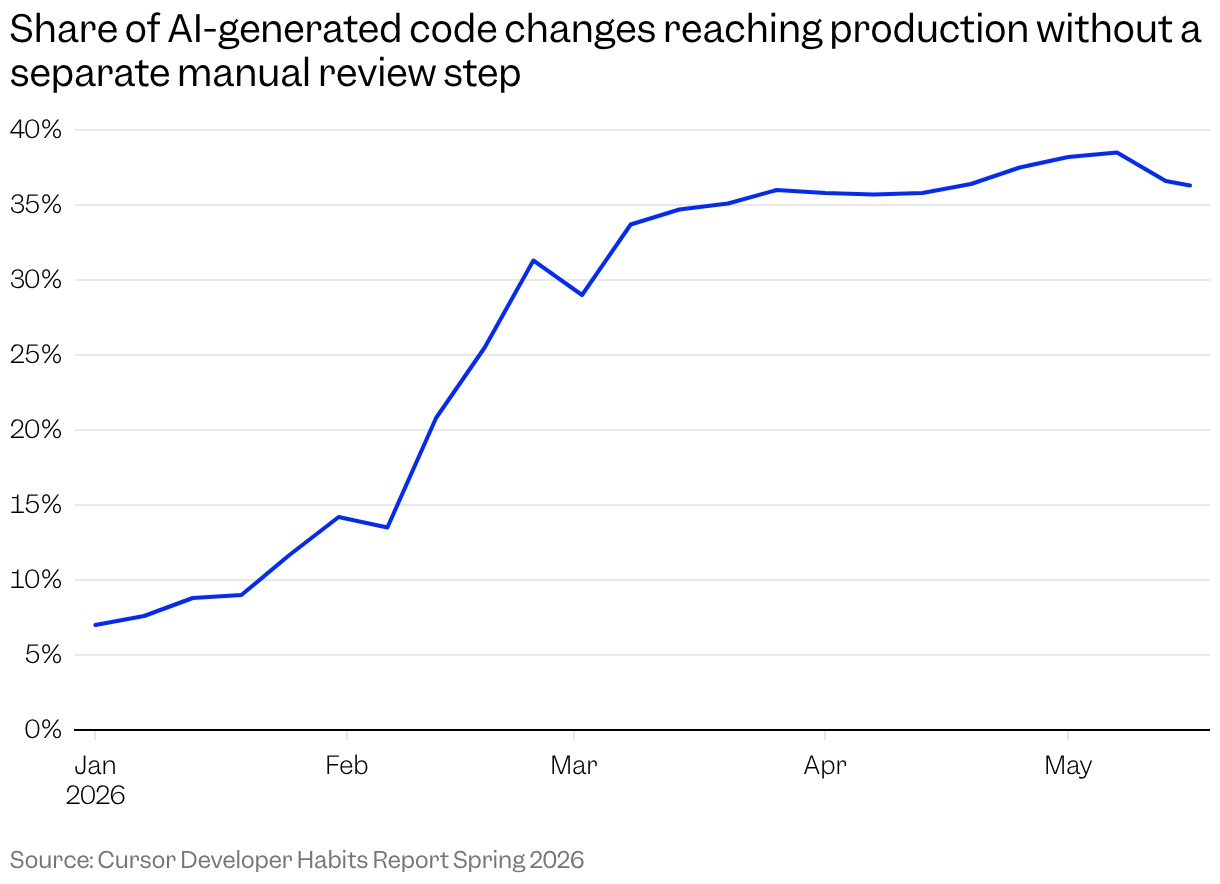
The article discusses the increasing reliance on AI in software development, highlighting a significant rise in the percentage of AI-generated code changes that are deployed without human review. This trend indicates a growing trust among developers in AI's capabilities to autonomously handle more complex coding tasks.
For small business owners, this shift could mean faster development cycles and reduced labor costs, as AI tools become more integrated into the software creation process. However, it's crucial to remain cautious; while AI's reliability appears to be improving, the quality of its output still warrants scrutiny. Operators should consider how they can leverage these advancements while ensuring their products maintain high standards.
“AI-generated code is surviving at higher rates than before, a sign that developers are finding the output increasingly reliable.” — Business Insider
Takeaway: Embrace AI tools in software development, but maintain oversight to ensure quality.
From the original item — Business Insider:
Carlos Barria/REUTERS
- A version of this story originally appeared in the BI Tech Memo newsletter.
- Sign up for the weekly BI Tech Memo newsletter here.
AI coding agents are increasingly being trusted to work without human oversight.
New data from Cursor shows the share of AI-generated code changes reaching production without a separate manual review step has jumped in the past six months.
This suggests developers are becoming more comfortable letting AI handle larger chunks of the software-development process on its own.
While Cursor doesn’t directly measure the quality of fully autonomous code, it says AI-generated code is surviving at higher rates than before, a sign that developers are finding the output increasingly reliable.
Sign up for BI’s Tech Memo newsletter here. Reach out to me via email at abarr@businessinsider.com.