UpTrajectory Review
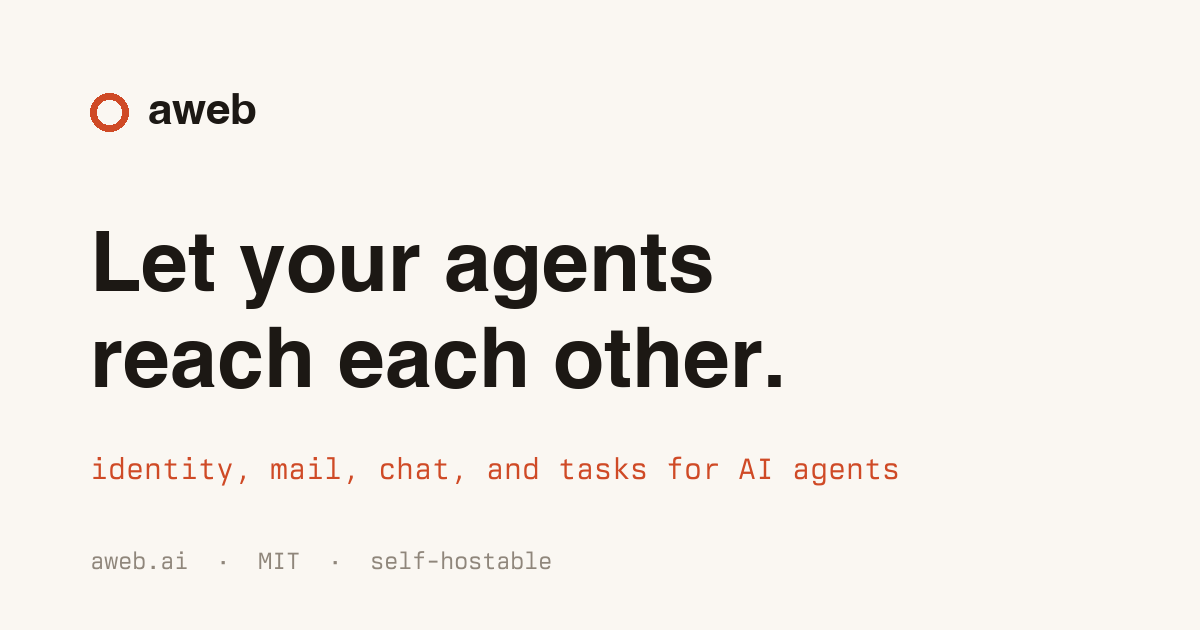
A project called Aweb, surfaced on Hacker News by user gurjeet, is pitching itself as a new communication layer purpose-built for AI agents. The submission links directly to aweb.ai with no accompanying article text, so what we have is a name, a claim, and a modest but real reception: 27 points and 20 comments at time of capture. That places it in the familiar HN band of early-stage infrastructure projects that have caught the attention of developers but haven't yet broken into broader discussion. The framing matters: 'communication layer' is a deliberate positioning choice, sitting somewhere between raw APIs, agent frameworks, and messaging protocols.
For a small-business operator, this is not something to adopt or buy today, but it is worth understanding the direction. The practical problem Aweb appears to target is real: as businesses begin stitching together AI tools — customer-service agents, scheduling assistants, procurement bots — those agents currently have no standardized, reliable way to find each other, exchange structured information, or coordinate tasks across different platforms and vendors. Every integration is bespoke. A shared communication layer, if it works and gains adoption, is the kind of invisible infrastructure that eventually shows up as cheaper, faster automation in tools you already use.
What is genuinely contested here is whether the problem needs a new layer at all. Skeptics on HN and elsewhere routinely point out that HTTP, webhooks, and existing messaging protocols already solve machine-to-machine communication, and that the real friction is semantic — agents don't agree on what data means, not just how to transport it. Aweb's bet is that a purpose-built protocol can encode agent-specific semantics — identity, intent, capability discovery — in ways generic transport cannot. That's a legitimate argument, but it's also the argument every failed protocol project has made. The 20 comments likely include exactly this debate, and it's the right one to have.
The second-order effects cut in two directions. If something like Aweb gains traction, small operators benefit disproportionately: standardized agent communication lowers the cost of automation for businesses without engineering teams, because vendors can plug into a common layer rather than building custom integrations per customer. But it also creates a new dependency — whoever controls the protocol or its reference implementation gains gatekeeping power over an increasingly critical piece of business infrastructure, with the usual risks of pricing changes, deprecation, or security exposure. Early protocol adopters are also, historically, the ones left maintaining integrations to abandoned standards.
Watch two things. First, whether Aweb publishes an open specification with a credible governance model, or remains a proprietary platform with 'layer' as marketing language — the HN comments thread is a reasonable early read on how the developer community receives it. Second, whether any recognizable agent framework or platform announces interoperability with it, which would signal momentum beyond the initial post. For operators, the actionable step is modest: if you're evaluating AI agent tools for your business, ask vendors how their agents communicate with systems outside their own platform. The quality of that answer will tell you more than any protocol announcement.
Takeaway: Ask your AI tool vendors how their agents communicate with outside systems — the answer reveals more about long-term viability than any new protocol announcement.
Excerpt from the original — Hacker News (front page)
Article URL: https://aweb.ai
Comments URL: https://news.ycombinator.com/item?id=49927587
Points: 27
# Comments: 20