UpTrajectory Review
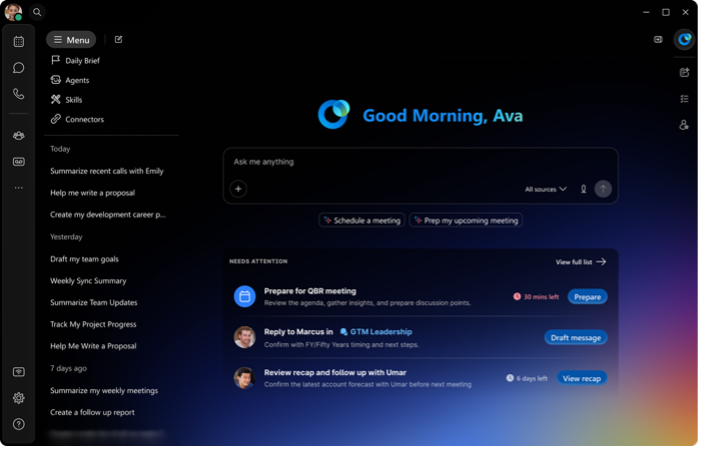
Cisco used its WebexOne event in Austin to announce a sweeping set of agentic AI features across the Webex platform, pushing beyond the copilot-style assistants most business users are familiar with. The headline additions: AI agents that can participate directly in team conversations, a tighter link between office hardware like desk devices and room systems and workplace management software, and customer-service tools that let agents keep working on a case after the live interaction ends. It is the clearest signal yet that Cisco views collaboration software not as a place where people talk, but as a workflow engine where humans and software agents divide labor.
For a small-business operator, the practical question is whether these tools reduce headcount pressure or simply add another subscription tier to an already crowded software budget. The post-interaction customer service feature is the most immediately useful: if an AI agent can summarize a call, draft follow-ups, and trigger next steps without a human babysitting it, a five-person support team can plausibly handle the volume of an eight-person one. The meeting-agent features are more speculative for small teams, where the culture of a standup or client call is often the product itself, and handing part of that to a bot carries real relationship risk.
What is genuinely new here is the depth of integration Cisco is claiming. Plenty of vendors bolt a chatbot onto a video platform; Cisco is wiring agents into the telephony, contact-center, and device-management layers simultaneously, which is only possible because it owns the networking and hardware stack end to end. That vertical integration is a real differentiator against Zoom and Microsoft Teams, but it also means the value proposition tilts toward larger enterprises with complex office infrastructure. We are skeptical of how much of this a 20-person company with a single conference room will actually feel in the first release.
The second-order effect worth watching is pricing and lock-in. Cisco has been steadily moving Webex toward a consumption-based model for AI features, and agentic capabilities are compute-expensive. Expect the sticker price of a Webex seat to diverge sharply depending on which AI features you enable, which makes procurement messy for a small business that cannot negotiate enterprise volume discounts. There is also a workflow-design burden: someone on your team has to define what the agents do, monitor them for errors, and own the customer-facing mistakes they will inevitably make early on. The technology is not plug-and-play, and the hidden cost is the human supervision layer.
If you run a business on Webex already, the move is to pilot the post-interaction customer-service agent first, where the ROI math is clearest, and treat the meeting agents as an experiment rather than a rollout. If you are on Zoom or Teams, do not switch platforms over this announcement alone, but use it as leverage in renewal conversations, because both competitors will feel pressure to match these features within two quarters. Watch for Cisco to publish pricing and usage-based tiers in the coming weeks, and for early adopters to report whether the agents handle edge cases or create more cleanup work than they save.
Takeaway: Pilot Cisco's post-interaction customer-service agent first, where ROI is clearest, and use this announcement as leverage in your current platform renewal talks.
Excerpt from the original — SiliconAngle
Cisco Systems Inc. today detailed a broad expansion of its Webex collaboration portfolio that brings artificial intelligence agents into team conversations, connects office technology with workplace management and enables customer-service agents to continue working after an interaction ends. Introduced at WebexOne in Austin, Texas, the updates extend Cisco’s strategy of integrating people, AI agents and […]
The post Cisco broadens agentic features in Webex collaboration platform appeared first on SiliconANGLE.