UpTrajectory Review
As grocery stores adapt to changing consumer preferences, many are expanding their ready-to-eat offerings to compete with rising restaurant costs. This trend reflects a growing demand from busy shoppers who seek convenience without the premium price tag of dining out. Retailers like Walmart and Whole Foods are leading the charge, providing freshly prepared meals that cater to families looking for budget-friendly options.
For small business owners, particularly in the food sector, this shift signals a need to rethink your value proposition. As grocery chains enhance their prepared food selections, restaurants may face increased competition for customers who prioritize convenience and cost. It's crucial to monitor how this trend evolves and consider how your business can differentiate itself, perhaps by emphasizing unique dining experiences or quality that grocery stores can't replicate.
“Prepared foods are competing directly with restaurants for meal occasions.” — Business Insider
Takeaway: Monitor the rise of grocery prepared meals and consider how to differentiate your restaurant's offerings.
From the original item — Business Insider:
Dominick Reuter/Business Insider
- Grocery chains have been leaning into ready-to-eat foods in recent years.
- The move aims to meet demand from time-stretched shoppers who don’t want to pay restaurant prices.
- The compromise is more expensive than groceries, but cheaper than eating out.
Time is money.
At least that’s sometimes the thinking when opting for a quick meal from a restaurant or ordering delivery instead of shopping for groceries and cooking at home.
Caught between busy schedules and rising restaurant prices, however, US shoppers are looking for a compromise — and grocery stores are selling one.
Many grocery chains are now offering some sort of freshly prepared options for shoppers who don’t have time to cook and don’t want to spring for restaurant food. (Plus, they can stock up on groceries during the trip.) The Whole Foods hot bar was one of the earliest to get in on this trend.
“We are actively making it easier for customers to stretch their budgets through solutions like our meals,” Walmart US CEO David Guggina said at a recent investor conference. He said the store’s ready-to-eat meals, like its rotisserie chicken and two sides, can feed a family of four for under $10.
Inflation data show that restaurant prices have been steadily rising over the past decade, while grocery prices have been more stable, apart from a few painful bumps since 2020.
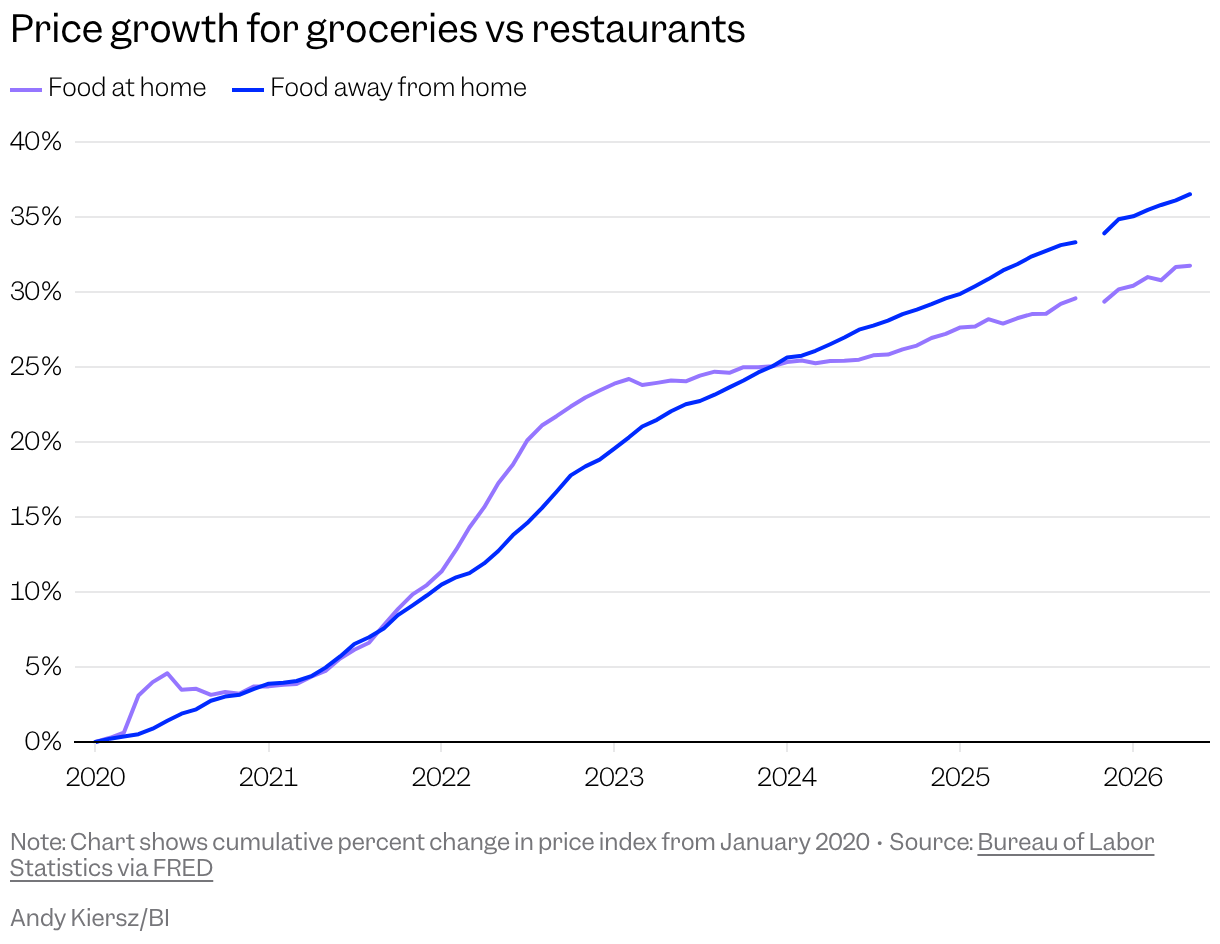
A report from McKinsey out this month highlighted the shift from restaurants to ready-to-eat grocery store meals as one of the top themes reshaping the grocery industry right now — up there with heavy hitters like e-commerce, retail media, and AI.
“Prepared foods are competing directly with restaurants for meal occasions,” the report said. “Roughly one-quarter of all consumers report purchasing grocery-prepared foods as a substitute for ordering from restaurants, most often replacing quick-service and fast-casual occasions.”
The shift is even more pronounced among younger customers, ages 18 to 29, the report found, and prepared foods were by far the leading driver of trip frequency across all sections of the store.
Even warehouse chains, which are not unlike oversize grocery stores, are in on the game, not just with $5 chickens, but also platters of mac and cheese, enchiladas, taco kits, and sushi.
Sam’s Club told reporters in Bentonville earlier this month that its recent expansion of fresh options is driven by members saying they don’t have enough time to cook and that restaurants are too pricey.
The Walmart-owned chain is also rolling out a program where it will chop selections of fresh fruit for sale at a fraction of the cost of a typical party tray.
Grocery delivery is also playing a role in shifting restaurant habits. Several chains — like Walmart, Sam’s Club, Costco, and others — now offer prepared options alongside their same-day fulfillment services.
And with speeds reaching 30 minutes or less, grocery stores are squarely in DoorDash or Uber Eats territory.
Of course, shoppers expect to get the whole package. As Service Management Group, a customer experience consultancy, puts it: “Prepared foods can’t just be fast. They have to deliver on flavor, freshness, and value to keep customers coming back.”