UpTrajectory Review
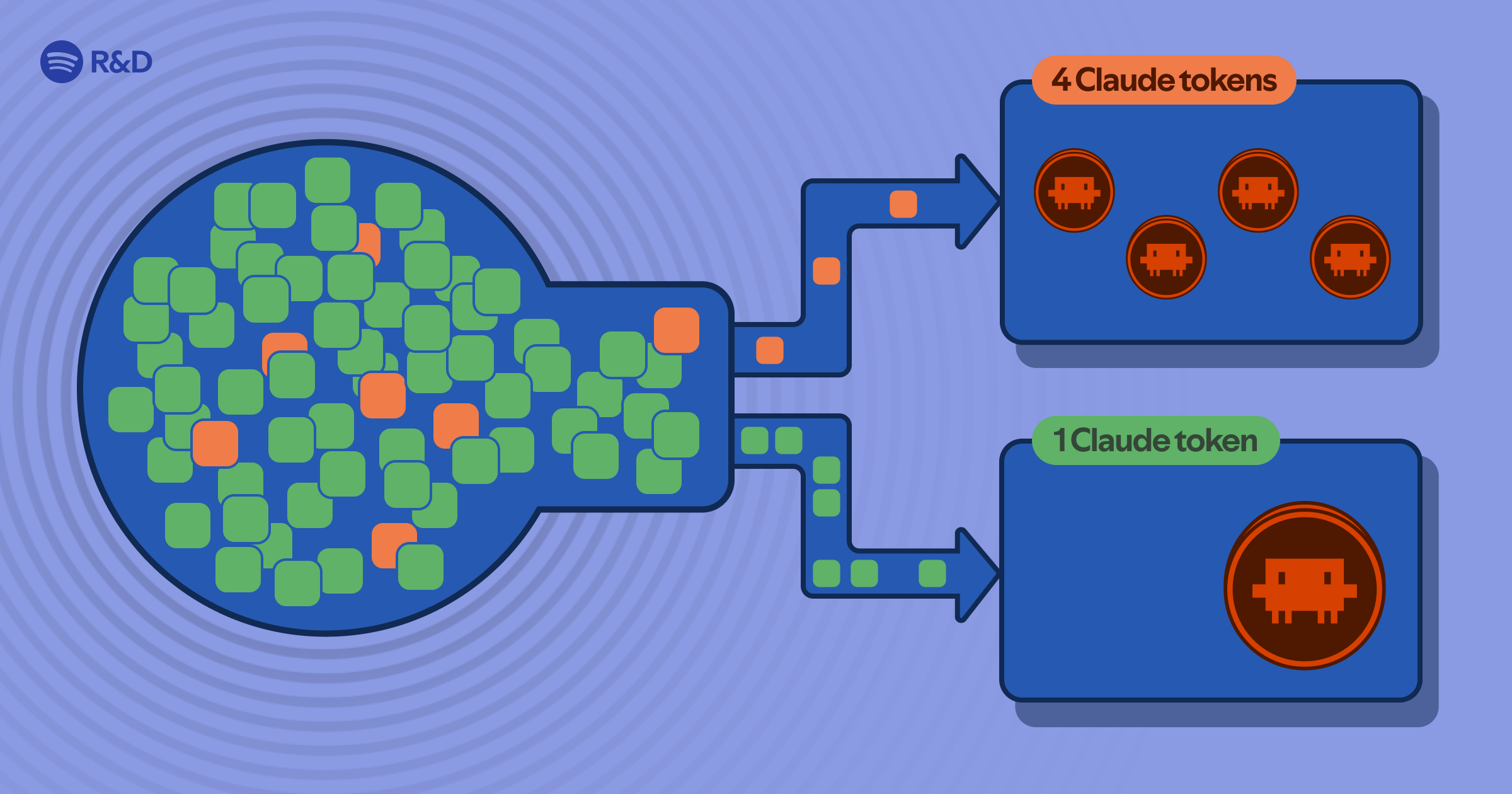
Spotify has released an internal AI coding tool called Portal that, according to one developer's account, reduced their Claude Code token consumption by ninety percent. The tool appears to sit between engineers and large language models, though the available details are sparse beyond this headline metric. What we can infer from the Hacker News posting is that Spotify is treating this as a significant enough efficiency gain to publish about it publicly, suggesting the company wants to establish technical credibility in the increasingly crowded AI-assisted development space. For a platform of Spotify's scale, even marginal per-engineer savings multiply across hundreds of developers working on recommendation algorithms, audio infrastructure, and consumer-facing features.
For small-business operators watching this, the immediate temptation is to chase the ninety percent figure without understanding what Portal actually does. The reality is that Spotify's engineering environment bears little resemblance to most small shops: they have dedicated platform teams, standardized codebases, and the organizational muscle to enforce tool adoption across departments. A solo developer or a five-person shop does not have token burn problems at Spotify's scale. What matters more is the underlying pattern—companies are building abstraction layers to make AI coding assistants cheaper and more predictable, which suggests the current generation of tools is still too expensive for routine use at volume.
The metric itself deserves skepticism. Token reduction is not the same as cost reduction is not the same as productivity gain. A tool that slashes token usage by aggressively caching responses or restricting context windows might save money while producing worse code, requiring more human review and correction. Spotify's post may address this; the Hacker News snippet does not. We would want to know whether the ninety percent drop held across multiple developers, whether output quality remained constant, and whether the savings netted out against Portal's own development and maintenance costs. Single-anecdote engineering blog posts are marketing as much as they are technical documentation.
The downstream effects are worth tracking regardless of the exact figure. If major tech employers successfully decouple coding assistance costs from raw API usage, the pricing power of Anthropic, OpenAI, and Google shifts. Token-based billing becomes less sticky; value migrates to orchestration and integration layers. For small operators, this could mean cheaper access to capable tools through intermediaries, or it could mean fragmentation where every platform builds its own wrapper and compatibility suffers. The risk is a repeat of the cloud cost optimization industry—tools that solve problems created by other tools, each taking their margin.
What to watch: whether Spotify open-sources Portal or keeps it internal, whether other companies validate the ninety percent claim with their own data, and whether Anthropic responds with pricing changes or native efficiency improvements. For operators currently using Claude Code or similar tools, the actionable question is whether your token spend is actually a problem worth solving. Audit your monthly API bills against engineering hours saved. If the ratio is favorable, a Spotify-style optimization layer is premature. If token costs are creeping toward salaried-developer territory, the abstraction-layer approach Portal represents is worth studying—though probably building in-house only if you share Spotify's scale and specialization.
The broader signal is that AI coding assistance is entering a cost-optimization phase, which typically follows initial capability demonstration and precedes mature pricing equilibrium. Small businesses benefit most not from chasing each new internal tool announcement, but from waiting for the market to produce affordable, well-integrated solutions without the overhead of custom infrastructure. Spotify's ninety percent claim is a data point in that larger transition, not a blueprint to copy.
Takeaway: Audit your actual AI tool spending against time saved before chasing efficiency optimizations designed for engineering organizations fifty times your size.
Excerpt from the original — Hacker News (front page)
Article URL: https://engineering.atspotify.com/2026/9/portal-by-spotify-cut-my-claude-code-token-usage-by-90
Comments URL: https://news.ycombinator.com/item?id=49571465
Points: 43
# Comments: 15