UpTrajectory Review
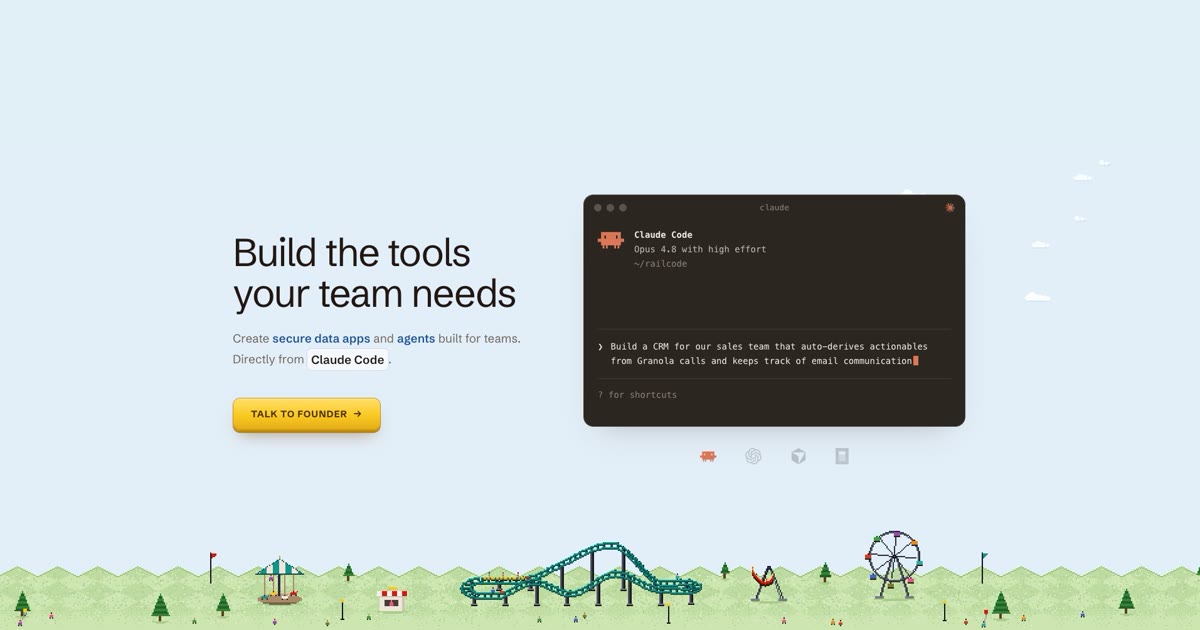
The Railcode team published a post-mortem on how they took a website built largely through AI-assisted coding — 'vibe coding,' in the current vernacular — and pushed it to a standard that reads as professionally designed. The piece landed on Hacker News with 68 points and 41 comments, which tells you something about where the conversation sits right now: plenty of small teams and solo founders are shipping AI-generated interfaces and quietly wondering why everything looks slightly off. The article's premise is that the gap between a functional AI-built site and a polished one is not more prompting but deliberate design intervention — typography, spacing, color restraint, and the hundred small decisions that models don't make on their own.
For a small-business operator, this is the right question at the right time. The first wave of AI coding tools sold speed, and they delivered — a non-technical owner can now stand up a landing page, a booking flow, or a simple storefront in an afternoon. But speed without taste produces the digital equivalent of a clip-art flyer, and customers notice even if they can't articulate why. The practical takeaway from posts like this is that AI gets you to roughly eighty percent, and the last twenty percent — the part that signals competence and builds trust — still requires either design judgment or a willingness to learn some. That last stretch is where most small operators either close the gap or lose the benefit of the tool entirely.
What is genuinely useful here is the framing that polish is a set of learnable, almost mechanical decisions rather than an innate gift. The Hacker News comment threads on these posts tend to split between developers dismissing vibe-coded output as inherently disposable and non-coders celebrating that design is now democratized; the truth sits in between, and this article appears to occupy that middle ground. We are mildly skeptical of any checklist that promises designer-grade results without a designer's eye — consistency is achievable through rules, but hierarchy and restraint are harder — yet the direction is sound. Treating design as a layer of explicit decisions, not a vibe the model absorbs, is the correct mental model.
The second-order effect worth watching is how this reshapes what clients and customers expect from small vendors. As more AI-assisted sites improve their surface quality, the baseline for 'looks legitimate' rises, which compresses the advantage that early adopters briefly enjoyed. It also shifts the economics of hiring: a freelance designer who once billed for full builds may increasingly be paid for audits and polish passes on AI-drafted work, which is cheaper for the operator but changes the relationship from execution to judgment. Conversely, businesses that skip the polish layer entirely risk looking worse than they did before AI, because the contrast between competent-looking competitors and a rough template is starker than it used to be.
If you have already shipped something AI-built and suspect it looks it, the actionable path is narrow and concrete: audit your typography first, because type carries more perceived quality than any other single element; enforce a strict color palette with real contrast ratios; and replace generic hero copy with something specific to your business. Then show the site to three people in your target audience and watch where they hesitate. The next wave of tooling will likely bake more of this in, but for now the operators who win are the ones who treat AI output as a draft to be art-directed, not a finished product to be published.
Takeaway: AI gets your site to eighty percent; deliberate design decisions on type, color, and copy close the gap that customers actually judge.
Excerpt from the original — Hacker News (front page)
Article URL: https://railcode.dev/blog/vibe-coded-website
Comments URL: https://news.ycombinator.com/item?id=49901973
Points: 68
# Comments: 41