UpTrajectory Review
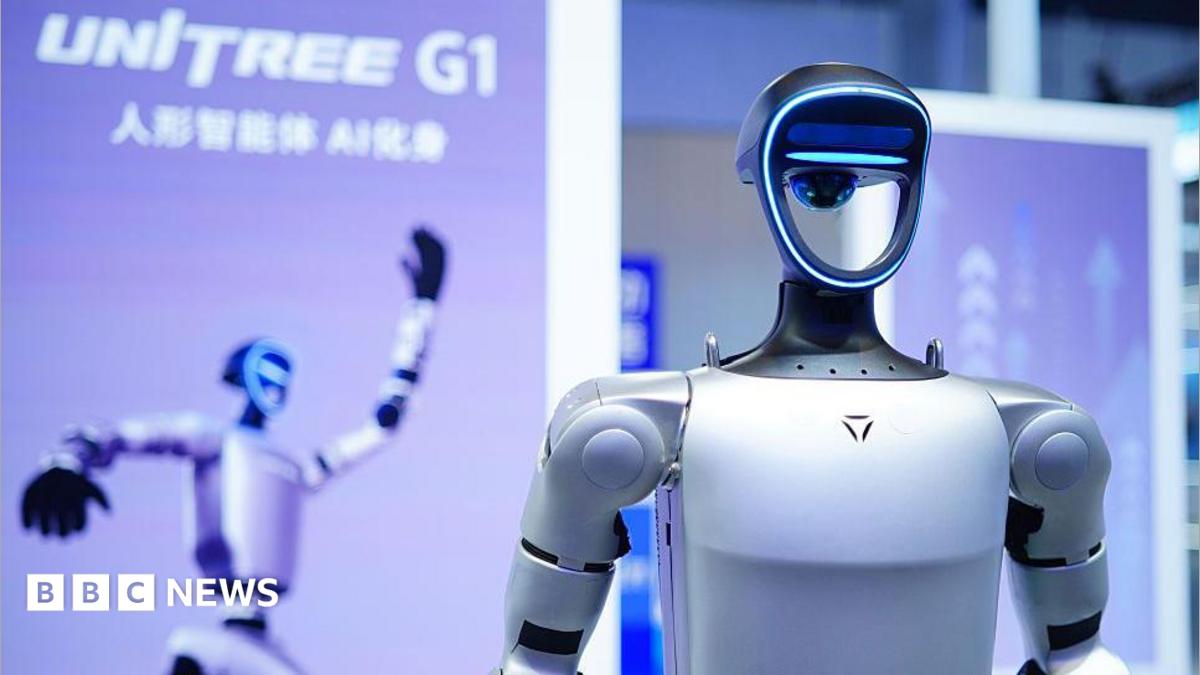
China's dominant humanoid robot manufacturer just listed on Shanghai's Star Market, the exchange purpose-built for hard-tech and semiconductor ventures. This is not a routine IPO. The Star Market was created in 2019 as Beijing's answer to Nasdaq, with looser listing requirements and a mandate to channel domestic capital toward strategic technologies that Washington has tried to choke off through export controls. A humanoid robot maker graduating to this board means the sector has crossed from speculative prototype to state-sanctioned industrial priority. For context, humanoid robots—machines built to navigate spaces and manipulate objects designed for human bodies—have remained laboratory curiosities for decades. The economics never worked: too complex, too brittle, too expensive. That this company now commands public-market valuation suggests someone with capital believes the equation has flipped.
For small-business operators, the signal matters more than the stock price. Humanoid robotics has been dominated by a handful of Western firms—Boston Dynamics, Tesla's Optimus project, Figure AI—burning billions in private capital with no clear path to unit economics that a mid-sized manufacturer could afford. A Chinese public listing introduces a different model: state-backed production scaling, domestic supply-chain integration, and implicit pressure to drive costs down fast enough to justify retail investor enthusiasm. If this succeeds, the competitive dynamic shifts from 'when will humanoids be affordable' to 'how fast can they undercut skilled labor at scale.' That timeline compression should worry any operator whose margins depend on tasks currently requiring human dexterity—assembly, inspection, packaging, basic maintenance—in facilities where re-engineering the workspace for traditional automation is prohibitively expensive.
What is genuinely new here is the financing mechanism, not necessarily the technology. Western humanoid ventures remain private, dependent on venture capital patience and sovereign wealth fund appetite. Going public locks in permanent capital and exposes the company to quarterly performance pressure that typically punishes long development cycles. Beijing appears willing to absorb that tension differently—Star Market listings often trade at premiums reflecting strategic priority more than near-term revenue. We are skeptical of the implied technical maturity. The source text reveals nothing about production volumes, customer contracts, or unit economics. A public listing proves regulatory confidence and investor appetite, not that these machines currently do useful work at prices anyone but subsidized pilot programs would pay. The history of robotics is littered with demonstration videos that collapse in unstructured environments.
The downstream effects split unevenly. Component suppliers—precision actuators, torque sensors, lithium battery packs, AI chips—will see demand signals accelerate regardless of whether this specific company succeeds. That benefits operators in those supply chains, particularly in East Asian manufacturing hubs already positioned. Conversely, logistics and light-assembly businesses in higher-wage economies face compressed decision windows. If Chinese humanoid production achieves even partial cost parity with offshore labor, the reshoring narrative that has driven domestic manufacturing investment reverses: why pay American or European wages when a depreciating robot works three shifts without benefits? Labor advocates and industrial-policy architects in Washington and Brussels will face uncomfortable questions about whether their own robotics ecosystems can match this capital-formation velocity.
Watch three things. First, the lock-up period and subsequent share price trajectory—sustained premium or rapid deflation tells you whether institutional investors believe the technology story or are treating this as a thematic trade. Second, any disclosed customer names in quarterly filings: automotive assembly is the obvious beachhead, but breakthrough applications in agriculture, construction, or elder care would signal genuine versatility. Third, export licensing decisions. If Beijing restricts humanoid exports to build domestic manufacturing moats, Western operators gain breathing room. If it floods markets to capture global share before standards solidify, the competitive pressure intensifies dramatically. For operators now, the actionable move is mapping which of your processes require human-like dexterity but not human judgment—those are the first candidates for substitution, and the pricing benchmark just shifted.
The deeper uncertainty is whether humanoid form factors are even the right bet. Wheels, gantries, and single-purpose arms remain vastly cheaper for structured tasks. The humanoid obsession carries ideological weight—machines that replace us, literally shaped like us—that may distort capital allocation away from more pragmatic automation. This IPO validates that obsession in the world's largest manufacturing economy. Whether that validation proves prescient or expensive will shape employment structures and competitive strategy for the next decade.
Takeaway: Map processes needing human dexterity but not judgment—those face the earliest substitution pressure as humanoid costs drop.
Excerpt from the original — BBC Business
Shares in the world's biggest humanoid robot maker started trading on Shanghai's Star market on Wednesday.