UpTrajectory Review
Insurtech funding just posted its strongest quarter since 2022, but the headline number masks a troubling consolidation. Global investment reached $2.4 billion across 107 deals in Q2 2026, yet deal volume keeps shrinking. Eight mega-rounds absorbed the lion's share, with property-and-casualty players Corgi, ICEYE, Reserv, and Upstage alone capturing $1.4 billion—58 percent of the entire pie. This is not a broad-based recovery. It is capital flight to perceived safety, and the concentration should worry anyone outside the winner's circle.
For small-business operators, this bifurcation carries immediate practical weight. The P&C segment's dominance matters because commercial property, general liability, and workers' compensation are the coverage categories most small businesses actually buy. If capital is flooding into ICEYE's satellite-based risk modeling or Reserv's claims automation, those platforms may soon set the terms on which your next policy gets priced, underwritten, and settled. The question is whether these well-funded entrants will compete with incumbent brokers and carriers or simply sell their technology to them, preserving the same concentrated market structure under shinier branding.
What CB Insights frames as a funding surge looks, on closer inspection, like a continuation of venture's retreat from early-stage risk. The 107-deal count is almost certainly down sharply from quarterly levels seen even two years ago, though the brief does not provide that comparison. We are skeptical of narratives that treat mega-rounds as sector health. They more often signal that limited partners are pressuring general partners to deploy into existing portfolio companies rather than back new founders. The eight companies that cleared the bar are not necessarily the eight most innovative; they are the eight best positioned to absorb $100 million-plus checks in a risk-off environment.
The downstream effects split unevenly across the insurance value chain. Agents and independent brokers face the familiar squeeze: well-capitalized direct-to-business platforms can outspend them on customer acquisition while simultaneously lobbying regulators for favorable licensing treatment. Meanwhile, legacy carriers sitting on balance-sheet capital may become acquirers of the very insurtechs they once feared, folding disruptive pricing models into existing cost structures without passing savings to policyholders. The least visible but most consequential shift may be in reinsurance, where ICEYE's real-time catastrophe monitoring could eventually let carriers offload less risk, tightening capacity for small businesses in disaster-prone markets.
Operators should watch three specific developments through year-end. First, whether Reserv or Corgi announce partnerships with major carriers or instead pursue full-stack licensing—each path implies different pricing pressure timelines. Second, any state regulatory filings by these mega-funded players, which often precede market entry by six to twelve months. Third, the Q3 and Q4 deal counts; if they fall further while round sizes grow, the sector is genuinely consolidating, not expanding. In the meantime, business owners nearing renewal should solicit quotes from both incumbent brokers and newer direct platforms, if only to benchmark whether the insurtech billions are producing any consumer surplus yet.
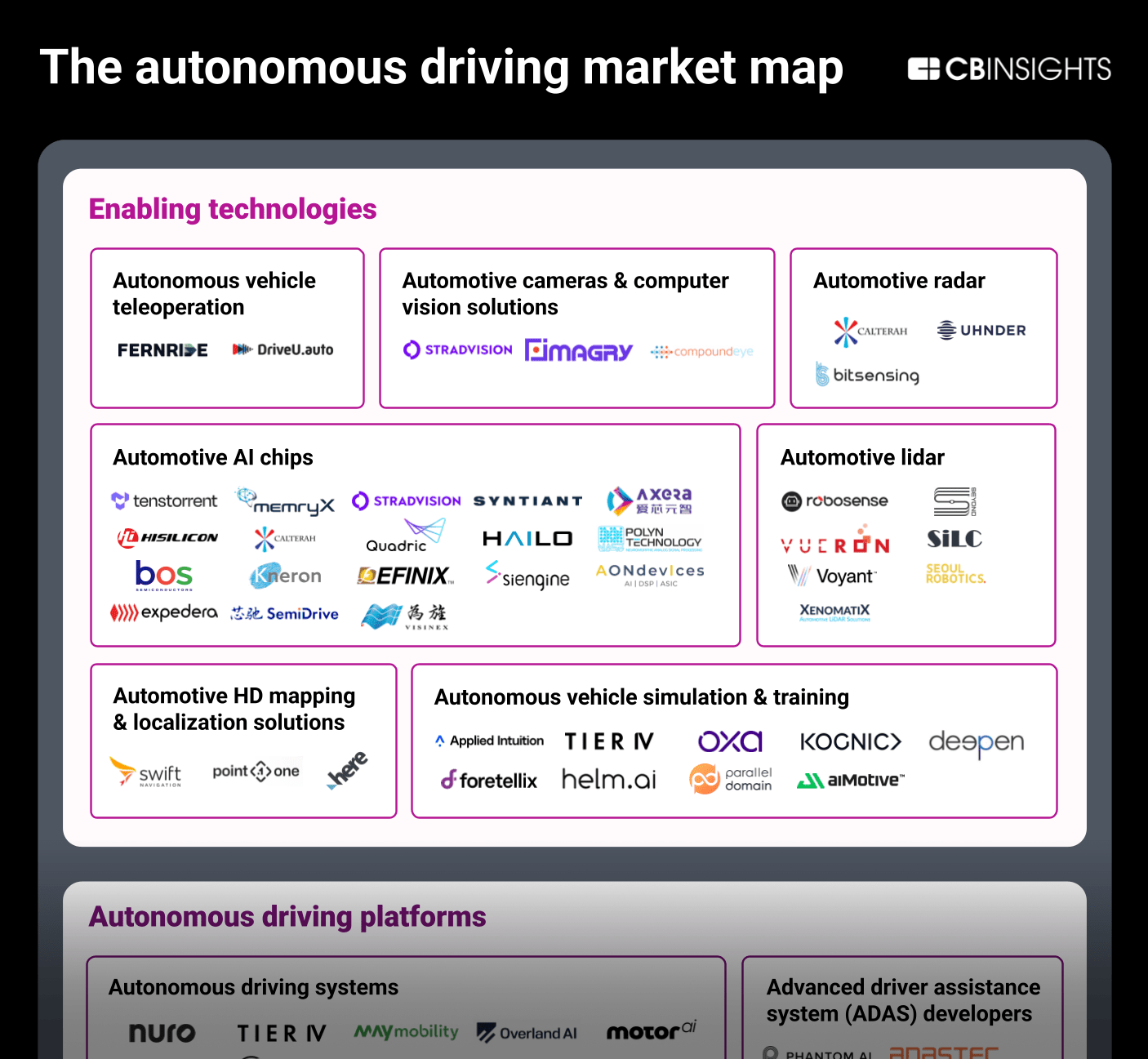
The autonomous vehicle section, while secondary here, merits a brief note for operators with fleet exposure. Zoox's commercial launch in Las Vegas and Motional's planned Uber integration suggest commercial auto insurance pricing may face disruption sooner than personal lines. Hailo and Waabi's work on edge AI and simulation could eventually matter for underwriting models if telematics data becomes standard in commercial policies. These remain speculative, but fleet-dependent businesses should track whether their current carriers are investing in similar capabilities—or ceding that ground to technology vendors.
“Investors are writing bigger checks, but to fewer companies, a trend that matches the wider venture market.” — CB Insights Research
Takeaway: Shop your next P&C renewal across both legacy brokers and well-funded insurtech platforms to capture any pricing pressure from the capital influx.
Excerpt from the original — CB Insights Research
Below, we break down some of tech’s biggest stories, with analyst perspective on the moves that matter the most.
Here’s what we’re watching this week:Q2’26 insurtech funding
Another autonomous driving milestone
Y Combinator’s call for startupsThis brief is adapted from our weekly newsletter. Sign up here to get it in your inbox every Thursday.
1. Insurtech recorded its best funding quarter in four years, but deals continue to collapse.
Global insurtech funding hit $2.4B across 107 deals in Q2’26, the highest quarterly funding total since Q3’22.
Most of the capital went to a handful of companies, with eight mega-rounds driving the quarter. Investors are writing bigger checks, but to fewer companies, a trend that matches the wider venture market.P&C specifically had a strong quarter, with four companies (Corgi, ICEYE, Reserv, and Upstage) raising a combined …