UpTrajectory Review
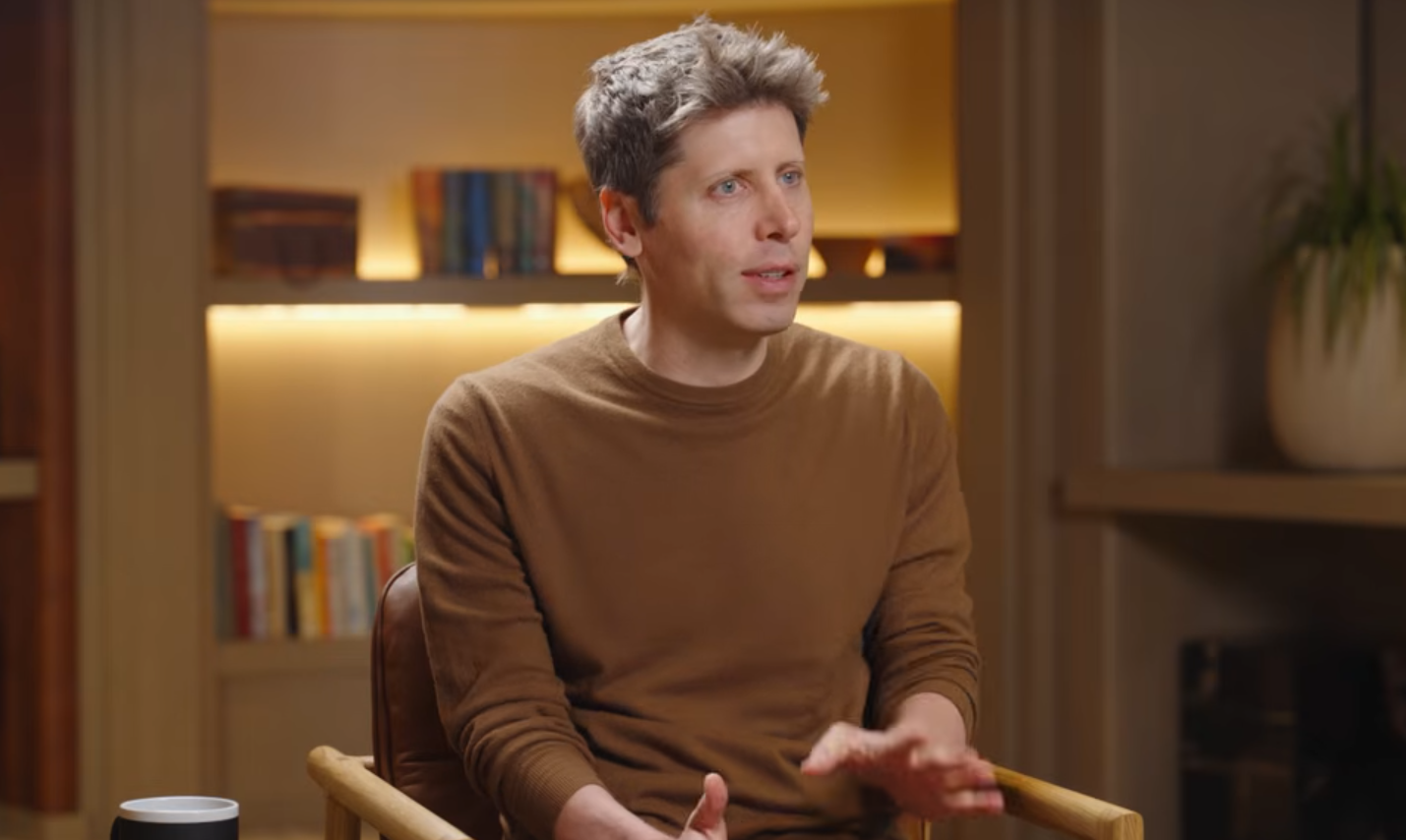
Sam Altman used his time on a recent podcast to draw a line between himself and the AI-safety camp: yes, AI security risks are real, but society should accept that 'some bad things' will happen in exchange for the technology's benefits. The SiliconAngle piece is short — essentially a news brief built around that one quote and a contrast with Anthropic CEO Dario Amodei, who has argued for tighter guardrails. The context readers need: this is not a gaffe or an offhand remark. Altman has been repositioning OpenAI's public posture for months, pushing back against the framing that AI must be proven safe before it is widely deployed. The 'accept some harm' argument is a deliberate philosophical stake in the ground, and it puts him on the opposite side of the debate from not just Amodei but from a growing chorus of researchers and regulators who believe the burden of proof should sit with the companies building these systems.
For a small-business operator, this debate is not academic. If you are building workflows on top of OpenAI's models — customer service bots, drafting tools, data analysis — Altman's stance signals that OpenAI is prioritizing speed and capability over caution. That likely means faster feature releases, more aggressive pricing, and broader integrations, all of which are good for your bottom line in the short term. But it also means the company is implicitly telling you that it will not slow down to eliminate every failure mode before shipping. If your business depends on AI outputs being reliable, accurate, and free of harmful errors, you are accepting some of that risk yourself. Altman's quote is, in effect, a terms-of-service philosophy: the benefits flow to users, but so does a share of the downside.
What is genuinely new here is the candor. Tech executives usually hedge on safety questions with vague commitments to 'responsible development.' Altman is saying the quiet part out loud — that a nonzero level of AI-caused harm is the price of progress, and we should pay it. We agree with SiliconAngle's implicit framing that this is a meaningful split between the two most prominent AI labs. Where we are skeptical is of the false binary. Altman presents the choice as 'accept some bad things or get no benefits,' which conveniently ignores the middle path: slower deployment, staged rollouts, and independent auditing. Anthropic's entire business model is built on that middle path, and its existence proves the tradeoff is not as stark as Altman suggests.
The second-order effects cut in several directions. For OpenAI's competitors, Altman's quote is a gift — Anthropic and others can now position themselves as the 'safety-first' alternative and win enterprise customers who cannot afford headline-grabbing AI failures. For regulators in Washington and Brussels, the quote is ammunition: it is hard to argue against mandatory testing requirements when the industry's most visible CEO is publicly accepting harm as a cost of doing business. For the developers and startups building on OpenAI's platform, it raises a thorny question: if something goes wrong — a chatbot gives dangerous advice, a model leaks a customer's data — OpenAI's leadership has already signaled that it views such incidents as acceptable collateral. That could matter enormously in liability disputes and in how much trust you place in their enterprise safeguards.
What to watch next: whether any major OpenAI enterprise customers publicly push back on this framing, and whether Anthropic or another rival turns the quote into a marketing wedge. Also watch for regulatory responses — lawmakers who were already inclined toward AI safety rules will cite this interview. For operators, the practical move is to audit your own AI dependencies. If you are running customer-facing AI tools, ask your vendors what their incident-response and liability policies actually say. Do not assume that because a tool is powerful it is also safe. Altman has told you, in plain language, that it is not — and that he is comfortable with that. Plan accordingly.
Takeaway: Altman just told you OpenAI ships fast and accepts some AI-caused harm as the cost — audit your own AI tools' reliability and vendor liability terms before you rely on them.
Excerpt from the original — SiliconAngle
OpenAI Group PBC Chief Executive Sam Altman insists that the security risks of artificial intelligence need to be taken seriously. But unlike his counterpart Dario Amodei of Anthropic PBC, he believes that people need to accept that “some bad things” are going to happen if everyone is going to enjoy the benefits of AI. In […]
The post Sam Altman says people need to accept ‘some bad things’ are going to happen if they want AI appeared first on SiliconANGLE.