UpTrajectory Review
The article highlights the increasing importance of creativity in the workplace, particularly in the context of AI advancements. Industry leaders, including Sam Altman and Mustafa Suleyman, emphasize that the ability to ask creative questions and orchestrate ideas will be crucial for success. Despite widespread acknowledgment of creativity's value, a significant gap exists between recognizing its importance and effectively implementing creative initiatives within organizations.
For small business owners, this insight is particularly relevant as they navigate an increasingly competitive landscape influenced by AI. The stark contrast between the 81% of leaders who claim to generate creative ideas and the mere 16% who successfully convert those ideas into growth initiatives suggests a critical area for improvement. Embracing a culture of applied creativity could be the differentiator that propels a small business ahead of its competitors, especially as customer expectations evolve.
“creativity will remain the real currency.” — Fast Company
Takeaway: Focus on fostering a culture of creativity to drive growth and engagement in your business.
From the original item — Fast Company:
In a January 2025 podcast episode, Open AI CEO Sam Altman was asked what the most important skill would be in the age of AI. His answer was—in simplest terms—the ability to ask creative questions. Last summer, Mustafa Suleyman, CEO of Microsoft AI, wrote that, for all the fear about AI, he genuinely believes that “creativity will remain the real currency.” And in an August Business Insider feature, Autodesk CEO Andrew Anagnost said that people will need to become “creative orchestrators” if they want to succeed in an AI-driven workplace.
If you listen to enough AI experts, you’ll inevitably hear the same common refrain: In the AI era, creativity is the most important asset an executive can have.
So where are all the creative leaders?
According to Nick Law, creative strategy and experience lead for the creative group Accenture Song, most people agree that creativity will be a core differentiator in the new way we work—but companies aren’t meeting that reality head-on.
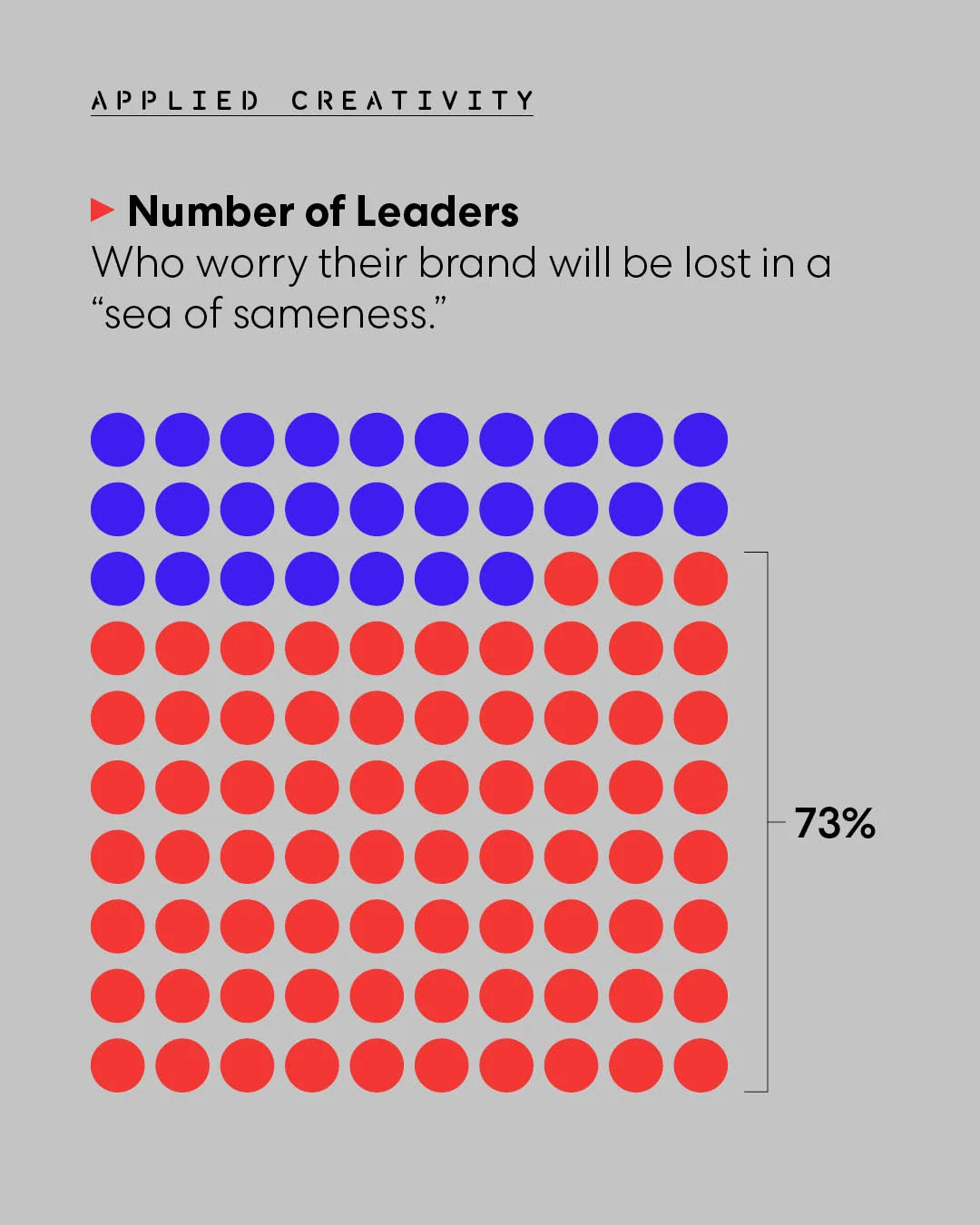
Through a year of research, his team found that, while 81% of top business leaders say their organization can generate creative ideas, only 16% said they very frequently turned those ideas into initiatives that drove growth. That rare 16% saw major results from their efforts, though. According to their research, these hyper-creative organizations outperformed their peers on revenue growth, employee engagement, and customers.
The goal of the research, which is presented in Accenture Song’s new study “Applied creativity—and how to lead it,” is to understand exactly how that golden 16% of companies is converting creative ideas into real outcomes. It draws on a quantitative survey of 1,725 executives across 14 countries, as well as 15 long-form interviews with leaders from companies like Ikea, Lego, VSCO, and Rivian.
Accenture Song has boiled the results down to a three-part playbook that it’s publishing publicly—and, ultimately, hoping to tailor to its clients.
Accenture Song is not the first company to try to package a new organizational framework for a business landscape in flux. Major changes in technology tend to yield this kind of effort: In the early aughts, for example, the digital transformation ushered in the height of “design thinking,” a concept popularized by the consulting firm Ideo that claimed to help anyone, at any organization, think like a designer.
As Fast Company has reported, design thinking is on its way out—and Law believes his team’s research shows it’s about time for “applied creativity” to take its place.
What is “applied creativity?”
Design thinking was once the gold standard for companies looking to adopt a framework that would help them generate Apple-caliber creative ideas. But the term has fallen out of vogue at major corporations, to the point where job listings are now far less likely to include the term. According to Law, that’s because design thinking always had one fatal flaw, and AI’s shakeup of the workplace has brought it into stark relief.
“The reason that it stalled when it stalled was because there was always a missing link,” Law says. That link, he believes, was companies’ propensity to think of creativity as a subjective quality that anyone can have, instead of a skill that requires training and experience.
“It’s not dignifying the training and talent that it takes to be a good creative, and we never question that when it comes to technical ability,” Law says. “No one thinks that because they’ve read a few articles on large language models that they can go and then build one, but somehow people think because they see ads or because they use products that they can tell stories and create designs.”
The pseudo-expert phenomenon is accelerating in the age of AI, as the technology lowers the barrier of entry for many skills that previously required years of specific training. Engineers, for example, are now capable of whipping up visual assets on platforms like Canva and Figma; conversely, designers can also use tools like Claude and Cursor to generate code. Per a recent study called AI in Design, a whopping 50% of designers are now shipping code to production (a concept that, just two years ago, would be virtually unheard of).
David Droga, Accenture Song’s former CEO and current vice chair, says that as the technical playing field levels, creative expertise will become much more important to define. “Everyone’s caught up in the power of efficiencies and speed that AI is bringing to the market, but as soon as everybody has access to that, it becomes table stakes,” Droga says, adding, “It’s always going to come down to the differentiation that brands have to stand for, and that is going to be the creative people who can reinterpret things and see beyond what is linear and logical.”
What to know about the “creative penalty”
One of the first insights that Law’s team gathered was that while most companies understand the importance of creative thinking in the AI era, many nonetheless view creative ideas as inherently risky.
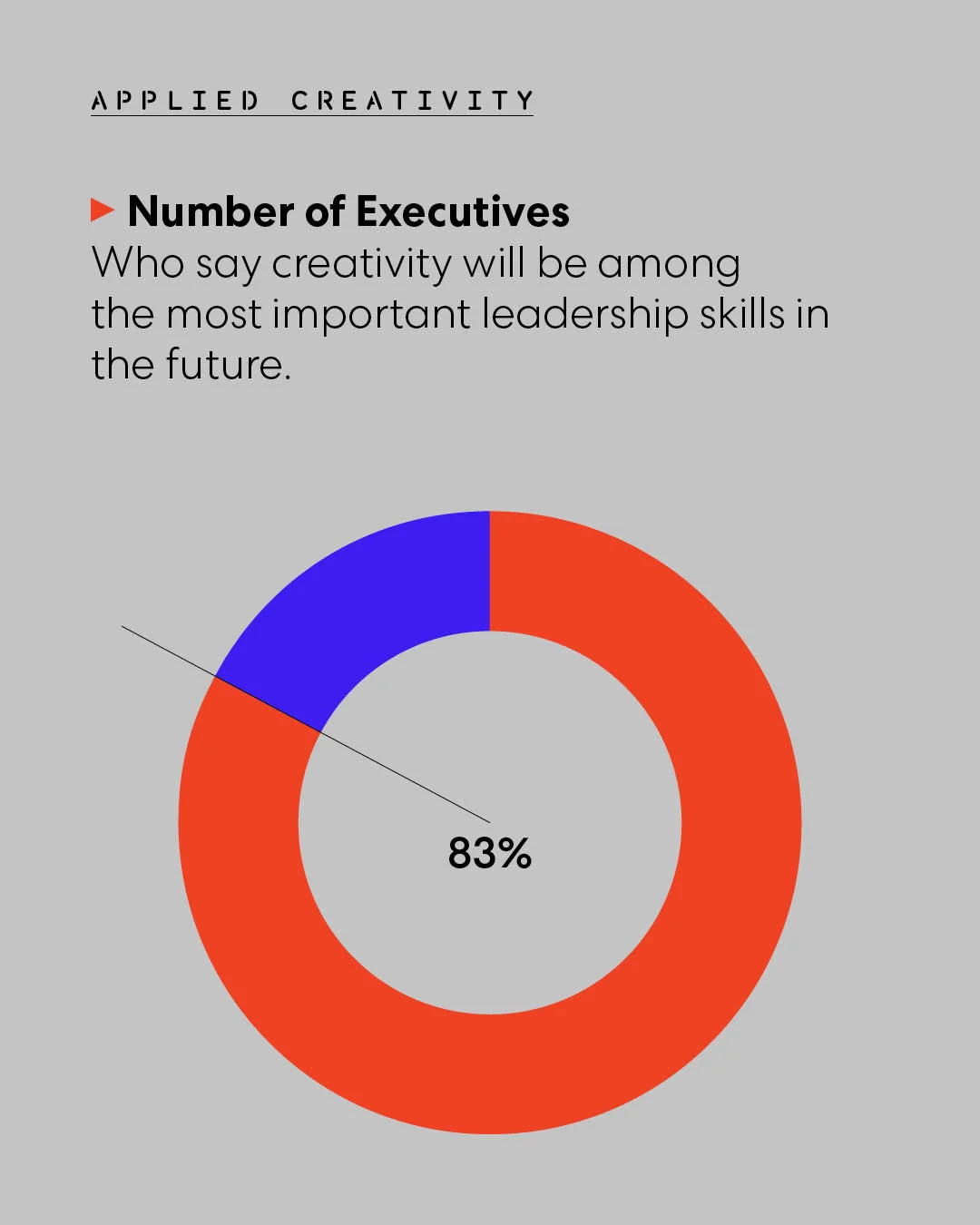
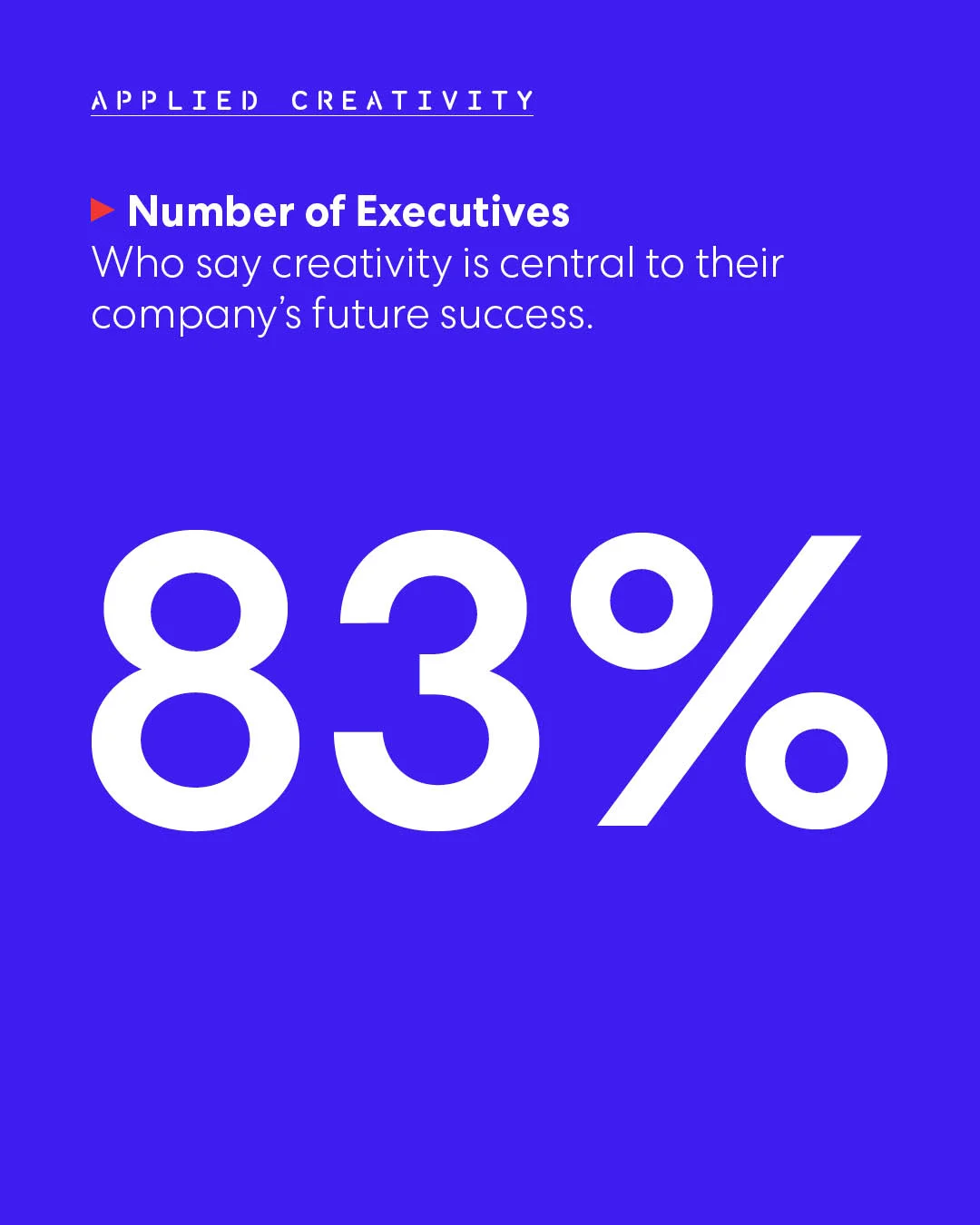
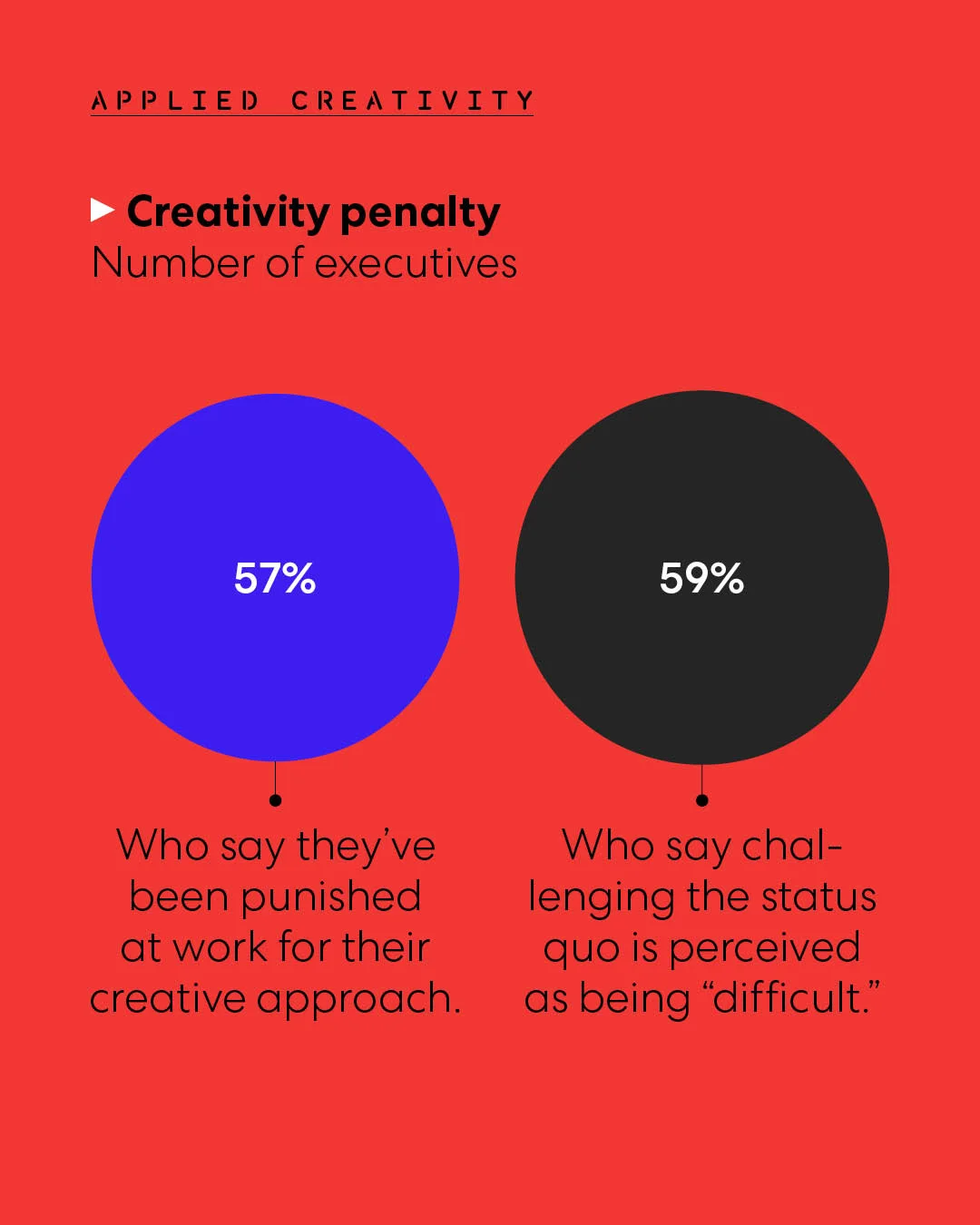
During the report’s quantitative survey phase, 83% of executives said they recognize creativity as central for future success, both for themselves and for their business. The same number said they believe creativity will be one of the most important leadership capabilities in the years ahead. Meanwhile, 63% reported that they know colleagues who have been held back for their creative approaches, and 57% said they themselves were held back. Overall, 59% said challenging the status quo makes you “difficult.”
According to Ndidi Oteh, CEO of Accenture Song, the problem isn’t understanding creativity’s importance—it’s building a real infrastructure around it. “I think most CEOs struggle not because they have a creativity problem, but they have an application problem,” Oteh says.
Through both its quantitative and qualitative interviews, Law’s team found that the companies that successfully applied creativity had three key pillars in common: expertise, commitment, and structure.
The three-part playbook to creative leadership in the AI era
The first pillar, expertise, means establishing an executive leadership team that’s built from creative practitioners.
In an analysis of 163 board members across the five largest companies in hospitality, consumer electronics, and apparel and fashion, Accenture Song found that only 9% had creative backgrounds, with careers centered on “shaping, elevating, or expressing the meaning customers see and feel.” As Fast Company reported back in 2024, most companies tend to elevate leaders from more technical and operational backgrounds, despite the fact that some of the most successful leaders of all time—from Steve Jobs to Oprah Winfrey and Phil Knight—came from creative backgrounds.
The report found that when more creatives were incorporated in the leadership structure, organizations were more likely to “Have a customer theory of mind that shapes all product and marketing development” and “Actively mine a diverse array of sources for creative inspiration—from customers, to frontline employees, to online communities, academia, and trends reports.”
At Nike, for example, senior leaders are in charge of distilling complex product and portfolio bets into clear, single-direction narratives that the whole team can align around. At Lego, research is turned into physical “play invitations” wherein senior leadership interact with the product in the boardroom and decide whether it fits with the company’s brand purpose.
The second pillar of applied creativity, commitment, refers to how leaders ensure that their organization does not foster barriers to creativity. That might look like creating a culture of structured forums for employees to contribute ideas, or frequent pitch sessions with internal and external participants. During Droga’s tenure as CEO of Accenture Song, he instituted a system where anyone in the company could book a one-on-one meeting with senior leadership—including himself—to pitch an idea or chat over work-in-progress.
The final pillar is structure. “Structure supplies the processes, decision rights, time horizons, and incentives that make creativity workable, and the contributions of creative experts rewarding, not risky,” the report reads. “At its core, structure is what moves teams from asking questions to making decisions.”
Structure can take many forms, but it essentially means having a clear system in place for creative brainstorming to be incorporated in every part of the business. Ikea, for example, has developed a system that lets innovation teams use AI-driven simulations to test ideas from end-to-end, which help senior leaders develop greater confidence in creative bets. The banking company HSBC uses a combination of gated funding and dedicated experimentation time to make sure that creative ideas aren’t stalled under compliance pressure.
Accenture Song is making the pitch that, whether a company specializes in furniture or financial services, this three-pronged approach is a fundamental place to start. “What we’re arguing is that this creative infrastructure is a universal way to turn ideas into concrete executions,” Law says. “It’s applied creativity—it’s not creative thinking.”
How the secret sauce driving Lego, Ikea, and Rivian comes together
The main goal of “Applied creativity—and how to lead it,” Droga says, is to show organizations that betting on creative leadership is a strong strategy, not a risk.
The report reveals that at organizations where all three “applied creativity” pillars were in place, there were several key ripple effects. First, those companies were more likely to embrace creative approaches everywhere, rather than only in traditionally creative silos like marketing and design—including growth and strategy, technology, talent management, and even risk and compliance.
These organizations also showed clearer readiness for an AI-enabled workplace. They were 37% more likely to strongly agree that investing in creative leadership will outperform in an AI-enabled world, 27% more likely to strongly agree that leaders who can guide teams through uncertainty and rapid change will stand out, and 25% more likely to strongly agree they are building a culture where human creativity and AI complement each other.
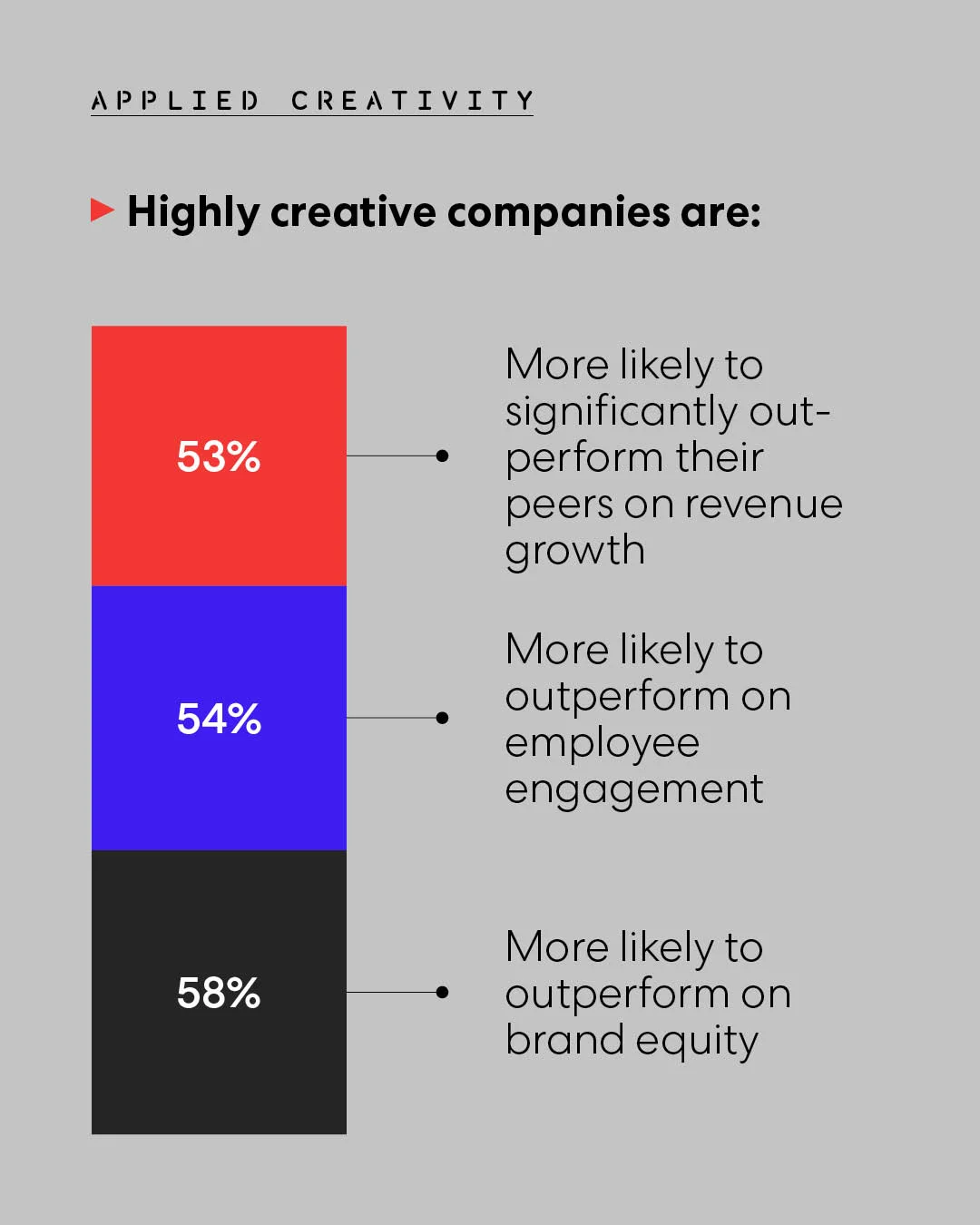
And that golden 16% of companies that very frequently turn creative ideas into growth initiatives see a whole host of benefits: They’re 53% more likely to significantly outperform their peers on revenue growth, 54% more likely to outperform on employee engagement, and 58% more likely to outperform on brand equity.
Ultimately, Droga says, he’s hoping that this report is just the start.
“My dream state would be that we can actually create something that changes the dynamics of who’s recruited and what’s taught in colleges,” he says. “Whatever we can do to make creativity be seen as a valuable resource and a necessity in businesses—not just a nice-to-have.”