UpTrajectory Review
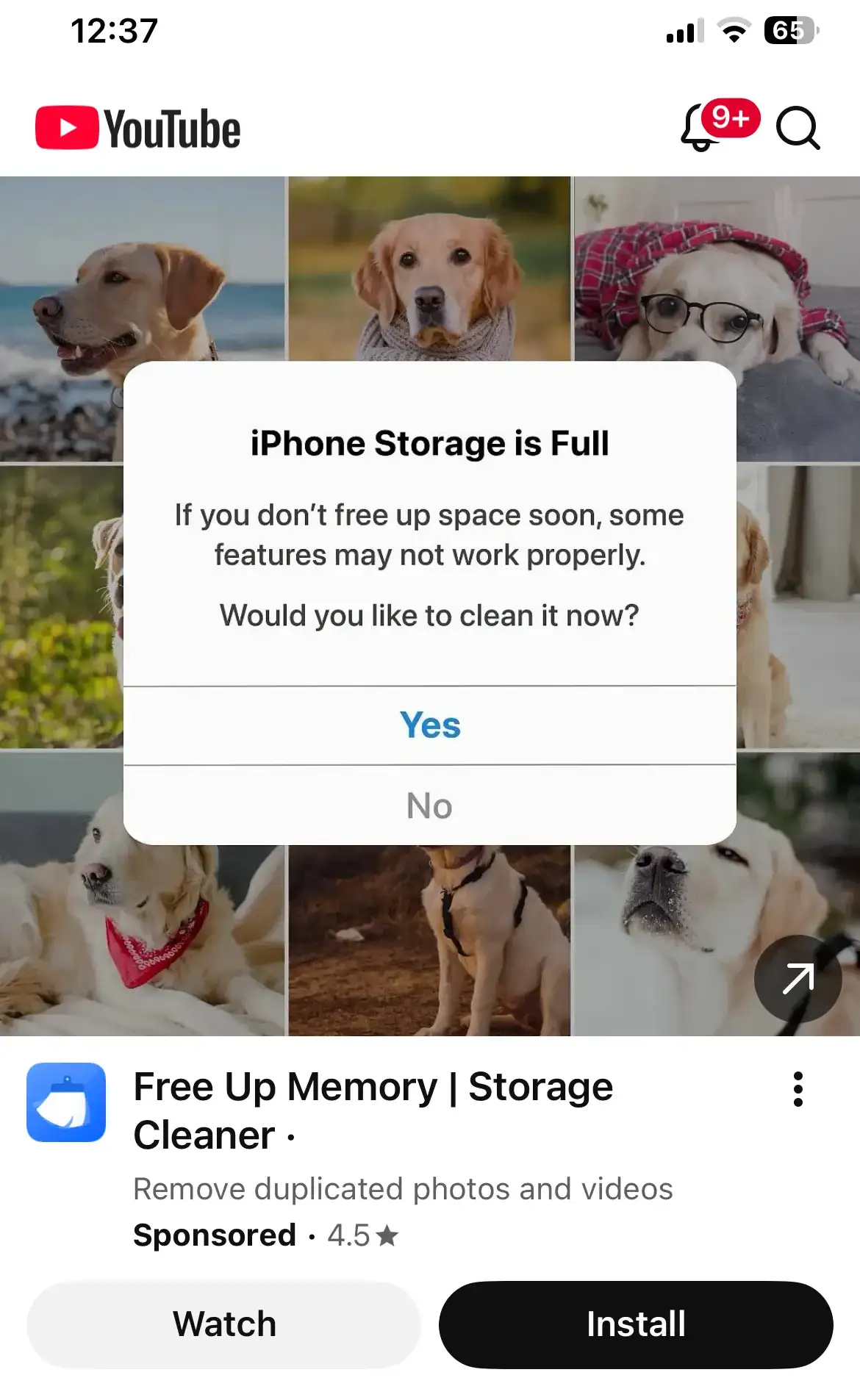
A technical investigation into Google's advertising infrastructure reveals that the company's dominant ad-serving platform continues to distribute fraudulent and malicious advertisements years after these problems were first publicly documented. The author, operating under the handle iamflimflam1, demonstrates through direct testing that Google's automated systems still approve ads containing obvious scams, phishing links, and malware payloads. What makes this particularly galling is not the existence of bad ads per se—every platform battles this—but the scale and persistence of the failure at a company whose entire business model rests on the supposed sophistication of its automated classification and trust-and-safety systems.
For small-business operators, this is not an abstract concern about Google's corporate competence. If you advertise through Google—and for most businesses, that's nearly unavoidable—your legitimate ads compete for attention and placement against fraudsters who Google somehow cannot filter out. Worse, your customers may encounter these scams adjacent to or even impersonating your business category, eroding trust in the entire advertising channel. The piece suggests that Google's incentive structure prioritizes ad volume and auction revenue over rigorous vetting, which means your advertising dollars subsidize a platform increasingly polluted by bad actors.
What is genuinely new here is the methodical, reproducible nature of the demonstration. Rather than anecdotes, the author appears to have submitted test ads and tracked which clear violations slipped through. The 545 upvotes and 261 comments on Hacker News indicate this resonated with a technically sophisticated audience that understands how these systems are supposed to work. Where we are skeptical: the piece likely understates the genuine difficulty of content moderation at Google's scale, and may not fully account for the lag time between detection and enforcement. But the core claim—that obvious scams persist—deserves attention precisely because Google has had years to address this.
The downstream effects split unevenly across the ecosystem. Established brands with dedicated legal teams can pursue trademark enforcement and demand takedowns; small businesses lack this leverage and must simply absorb the reputational damage when customers associate their industry with scams. Ad-tech middlemen and smaller publishers face a harder sell for programmatic advertising if inventory quality keeps degrading. Meanwhile, regulatory attention in Europe and the U.S. continues to intensify, meaning Google's ad problems may soon become every advertiser's compliance headache as lawmakers impose verification requirements that increase costs for all participants.
Watch for three developments: whether Google responds with specific policy changes or merely generic assurances; whether any regulatory action references these documented failures; and whether alternative advertising platforms gain traction by making cleaner inventory their differentiator. For operators, the actionable response is to audit where your traffic actually converts and whether Google's reported metrics match your internal attribution. Diversify acquisition channels not merely as risk management but as a genuine quality play—customers reached through less compromised environments may convert better even at higher apparent cost per acquisition.
The deeper question the piece raises is whether any automated system at Google's scale can maintain quality without fundamental structural changes to how ads are priced and reviewed. If the auction rewards speed and volume, and if Google's take is substantial regardless of ad quality, the incentive misalignment persists. Small businesses cannot fix this architecture, but they can stop treating Google advertising as a default setting and start treating it as a negotiated relationship where you demand—and verify—actual placement quality.
Takeaway: Audit your Google ad placements against actual conversions, and diversify acquisition channels to reach customers in less compromised environments.
Excerpt from the original — Hacker News (front page)
Article URL: https://www.atomic14.com/2026/09/13/why-is-google-still-serving-dodgy-ads
Comments URL: https://news.ycombinator.com/item?id=49686445
Points: 545
# Comments: 261