UpTrajectory Review
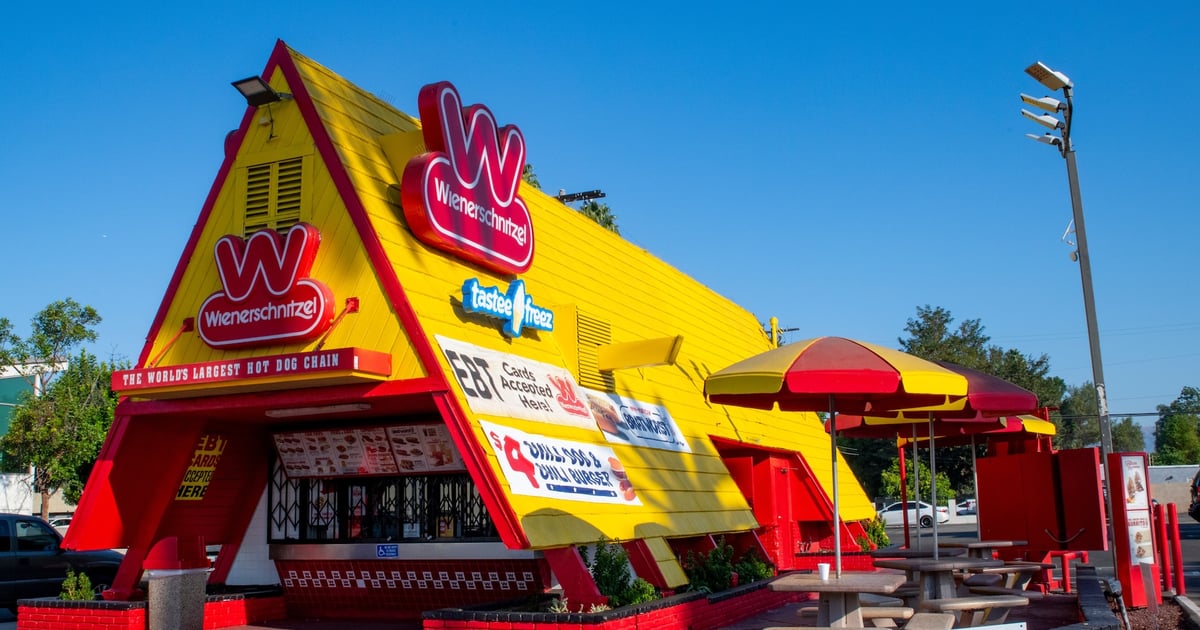
Wienerschnitzel, the California hot-dog chain best known for A-frame buildings and chili dogs, is now planting flags inside travel plazas in West Virginia—a geography and format both foreign to its historical footprint. This is not merely a new location strategy. It signals how legacy quick-service brands with limited development capital are using nontraditional real estate to solve a problem that has dogged them for years: how to grow when traditional franchise recruitment has slowed and construction costs have soared. The travel plaza channel, long dominated by national coffee and burger players, has opened to smaller chains as highway operators seek differentiation and as post-pandemic travel patterns have stabilized at elevated levels.
For small-business operators watching this, the lesson is about access to constrained real estate. Wienerschnitzel has roughly 320 locations, making it a mid-sized player with neither the balance sheet of McDonald's nor the buzz of a emerging concept. Travel plazas offer built traffic, shared infrastructure, and landlords motivated to fill space—effectively lowering the barrier to entry for franchisees who might otherwise lack the net worth to build from dirt. If you operate a regional brand or are considering franchise investment, this model deserves scrutiny: the economics differ materially from street-side locations, with higher captive-audience potential but also revenue-sharing structures and limited operating hours that can compress margins.
What is genuinely notable here is the geographic arbitrage. Wienerschnitzel is a western brand attempting eastern expansion through a format that de-risks the bet. West Virginia's interstate corridors see consistent long-haul traffic regardless of local population density, meaning the brand can build awareness without requiring the same market-deepening strategy that would apply in, say, opening freestanding units in Charlotte or Atlanta. We are skeptical, however, of how well a hot-dog specialist translates to the grab-and-go highway consumer who typically prioritizes speed and familiarity over novelty. The original coverage does not address whether Wienerschnitzel is modifying its menu or service model for this context, which would be critical intelligence.
The downstream effects ripple in multiple directions. For competing regional brands—think local barbecue chains, specialty sandwich concepts, or even other hot-dog players—Wienerschnitzel's move may pre-empt available travel plaza slots, accelerating a land rush. For existing Wienerschnitzel franchisees, nontraditional expansion can either validate or dilute brand equity depending on execution quality. For highway plaza operators themselves, adding a recognizable but distinct concept helps them compete against Buc-ee's and other destinations that have made the journey itself the attraction. The cost structure matters too: travel plaza builds typically run smaller footprints, which helps, but operator fees to the plaza landlord can run 10-15% of gross sales, a haircut that changes unit economics substantially.
Watch whether Wienerschnitzel publishes performance data from these locations, which would signal either confidence or caution. More immediately, operators should assess whether their own concept could survive in captive-audience environments: does your menu travel well, can you execute with limited kitchen equipment, and can your brand communicate itself in three seconds to a driver deciding between you and Subway? If you are a franchisee candidate, ask prospective franchisors specifically about nontraditional development rights and whether they are reserved for corporate or open to multi-unit operators. The travel plaza channel is becoming less exotic and more essential; the brands that figure it out now will have established relationships when the best locations are gone.
Takeaway: Audit whether your concept can execute in captive-audience locations before the best travel plaza slots are claimed by faster-moving competitors.
Excerpt from the original — Nation's Restaurant News
The California-based hot-dog chain is opening inside travel plazas in West Virginia as the brand looks for more growth.