
UpTrajectory Review
The Verge's Stepback newsletter traces how McDonald's and other fast-food giants have spent five years pushing AI chatbots into the drive-thru lane. The story opens with McDonald's 2021 pilot in ten Chicago restaurants, built on the startup Apprente, which the chain acquired in 2019 for its voice-conversation technology. Roth frames this as a slow-motion transformation: the bots stumbled early, struggled with accents and background noise, and drew customer mockery on social media. Yet the chains persisted, refining the models and expanding deployments. Today the technology handles a growing share of orders at thousands of locations across McDonald's, Wendy's, Taco Bell, and others, with human workers still hovering nearby to catch mistakes.
For a small-business operator, this story carries a clear warning and an opportunity. The fast-food giants are normalizing voice-AI ordering in the exact settings where small operators compete: quick-service restaurants, coffee shops, food trucks, and delis with a drive-up window or a phone line. When customers grow accustomed to talking to a bot at McDonald's, they will expect the same speed and accuracy at the local taco stand. The good news: the underlying technology is no longer exotic. Several vendors now license drive-thru and phone-ordering AI to independent operators at prices that undercut one part-time employee's annual wage. The window to adopt early, while the technology still feels novel to customers, is open now.
What Roth gets right is the emphasis on persistence. The chains did not abandon the bots after the viral failures; they treated each misfire as training data. That is a lesson many small operators miss when they dabble in a new tool, hit one rough week, and retreat to the old way. Where we are skeptical is the newsletter's framing of this as inevitable progress. The economics remain murky. Voice AI still fumbles complex modifications, struggles with regional accents, and occasionally hallucinates menu items. The chains have deep pockets to absorb those errors. A single botched order at a neighborhood spot costs a regular customer, not a rounding error.
The second-order effects reach beyond the counter. Drive-thru AI compresses the role of the front-line worker from order-taker to order-verifier and expediter. That shift reduces headcount at the window but raises the skill bar for whoever remains: they must troubleshoot the bot, handle exceptions, and smooth over the interactions it botches. For small operators, this means rethinking hiring and training, not just technology budgets. It also changes the competitive calculus. Chains that deploy AI well will shave seconds off each transaction, lift throughput at peak hours, and free labor for food prep. Operators who ignore the shift will find their lines longer and their labor costs higher than the chain across the street.
Watch two signals in the next twelve months. First, accuracy rates at scale: if the major chains publish order-accuracy numbers above 95 percent, the technology has crossed the reliability threshold for small operators. Second, pricing: as more vendors enter the market, per-location costs should fall toward the range of a monthly software subscription. Operators who run a drive-thru, a phone-order line, or a high-volume counter should start conversations with at least two AI-ordering vendors now, run a small pilot during a slow season, and measure accuracy and speed against their human baseline. The technology is ready for a test. It is not yet ready for blind trust.
The deeper lesson is not about chatbots at all. It is about how a technology moves from laughingstock to infrastructure while most operators are not watching. McDonald's started with ten restaurants and a startup acquisition. Five years later, the technology shapes how millions of people order lunch. Small operators who dismiss AI ordering as a gimmick risk waking up to find their competitors have quietly rewired the entire customer interaction. The time to pay attention is before the technology is boring.
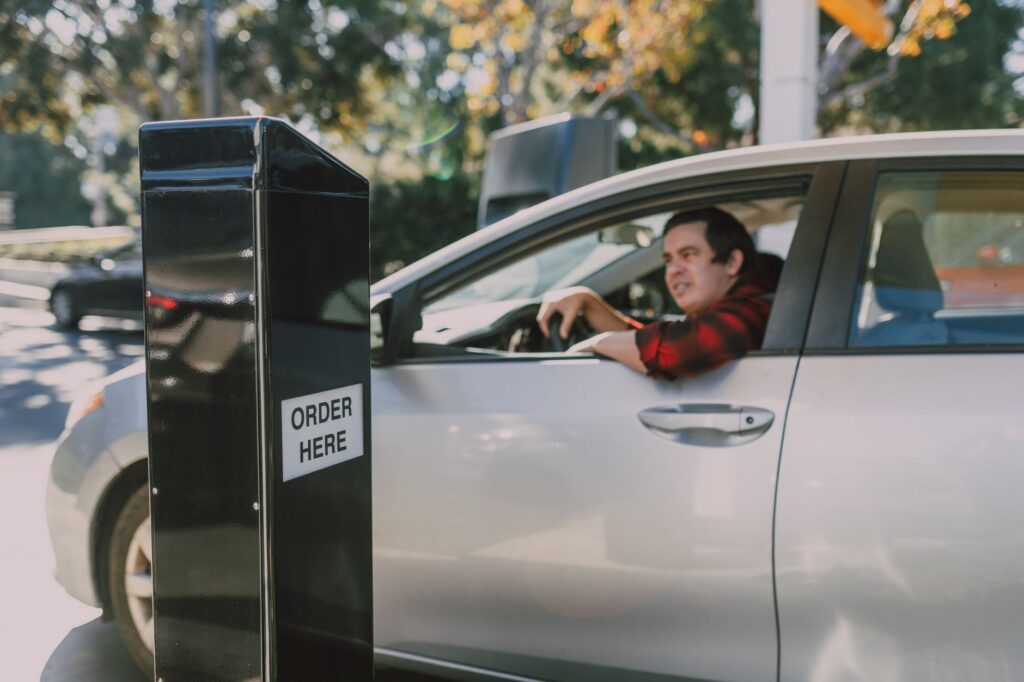
“McDonald's became one of the first major fast-food chains to greet customers with an AI chatbot at the drive-thru.” — The Verge
Takeaway: Pilot AI ordering now while the technology is still novel; waiting until it is standard means competing at a disadvantage.
Excerpt from the original — The Verge
This is The Stepback, a weekly newsletter breaking down one essential story from the tech world. For more news about how AI is seeping into our daily lives, follow Emma Roth. The Stepback arrives in our subscribers' inboxes at 8AM ET. Opt in for The Stepback here.
How it started
In 2021, McDonald's became one of the first major fast-food chains to greet customers with an AI chatbot at the drive-thru. It started small, deploying the voice-ordering technology at 10 of its locations in Chicago. McDonald's developed its drive-thru tech after acquiring Apprente, a startup focused on voice-based, conversational technology in 2019, and later wor …
Read the full story at The Verge.