UpTrajectory Review
The path from pop-up to permanent location has become the standard origin story for a certain generation of restaurant entrepreneurs, but Kevin Top's trajectory through Abstrakt Filipino Essence deserves attention for what it reveals about how ethnic cuisine breaks into mainstream markets. Top began with a pop-up to introduce his family's Filipino cooking to his community, then graduated to a food truck, and finally established a brick-and-mortar restaurant. This three-stage progression is now so familiar it risks becoming formulaic, yet the specific case of Filipino food matters because the cuisine has remained stubbornly underrepresented in American restaurant culture despite the country's sizable Filipino population and despite the mainstream success of Thai, Vietnamese, and Korean food.
For small-business operators in food service, Top's model offers both encouragement and a reality check. The pop-up-to-truck-to-restaurant pipeline works precisely because it defers the crushing capital requirements of a full buildout while building a customer base and refining operations. But the operators who survive this gauntlet typically do so because they solve a specific market problem. In Top's case, that problem was visibility: Filipino food lacked presence in his community despite being the fourth-largest immigrant group in the United States by some measures. The pop-up functioned as market research and marketing simultaneously, testing whether the barrier was demand or simply awareness.
What the brief item leaves unexplored is whether Top's success is replicable or exceptional. Filipino cuisine's relative absence from the American mainstream is a genuine puzzle—more established than many Asian food traditions here, yet less commercially developed. Some operators attribute this to the cuisine's heavy reliance on pork and vinegar profiles that don't map neatly onto health trends, or to a diaspora community that historically cooked at home rather than building restaurant infrastructure. Others note that Filipino food's moment keeps being predicted and deferred. Top's progression suggests the demand exists when the presentation is right, but one chef's breakthrough does not constitute a trend.
The food-truck stage deserves particular scrutiny for operators considering similar paths. Trucks solve real problems—lower rent, mobility to follow demand, built-in marketing—but they introduce others: commissary kitchen requirements, weather vulnerability, maintenance costs that can rival brick-and-mortar repairs, and the physical toll of the work. The operators who transition successfully to permanent locations often do so not because the truck was profitable enough to fund the move, but because it generated the proof of concept that attracted investors or lenders. Top's story likely follows this pattern, though the source text does not specify financing. The truck was a means to an end, not a destination.
For readers watching this space, the relevant question is whether Filipino food is approaching its mainstream moment or whether Abstrakt Filipino Essence will remain an outlier. Korean food's breakthrough required specific conditions: the Korean government's deliberate culinary diplomacy, the rise of K-culture more broadly, and chefs like David Chang who translated tradition through an American lens. Filipino food lacks comparable institutional support and has produced fewer nationally visible chefs, though that may be changing. Operators considering Filipino concepts should watch whether Top expands further—multiple locations would signal genuine market validation—or whether he remains a single successful operator in an otherwise undeveloped category.
The actionable insight for small-business operators is methodological, not culinary. Top's staged approach—pop-up, then truck, then permanent—reduces risk at each decision point by generating real customer data before the next capital commitment. But the approach requires discipline: the pop-up must actually test something specific, the truck must operate long enough to demonstrate sustainable demand, and the permanent location must open only when the concept is proven, not merely when ambition or competitive pressure demands it. The operators who fail in this model typically skip stages or misread early enthusiasm as scalable demand. Top's patience may be the most replicable element of his success.
Takeaway: Stage your restaurant launch to generate customer data before each capital commitment, and don't misread early enthusiasm for scalable demand.
Excerpt from the original — Nation's Restaurant News
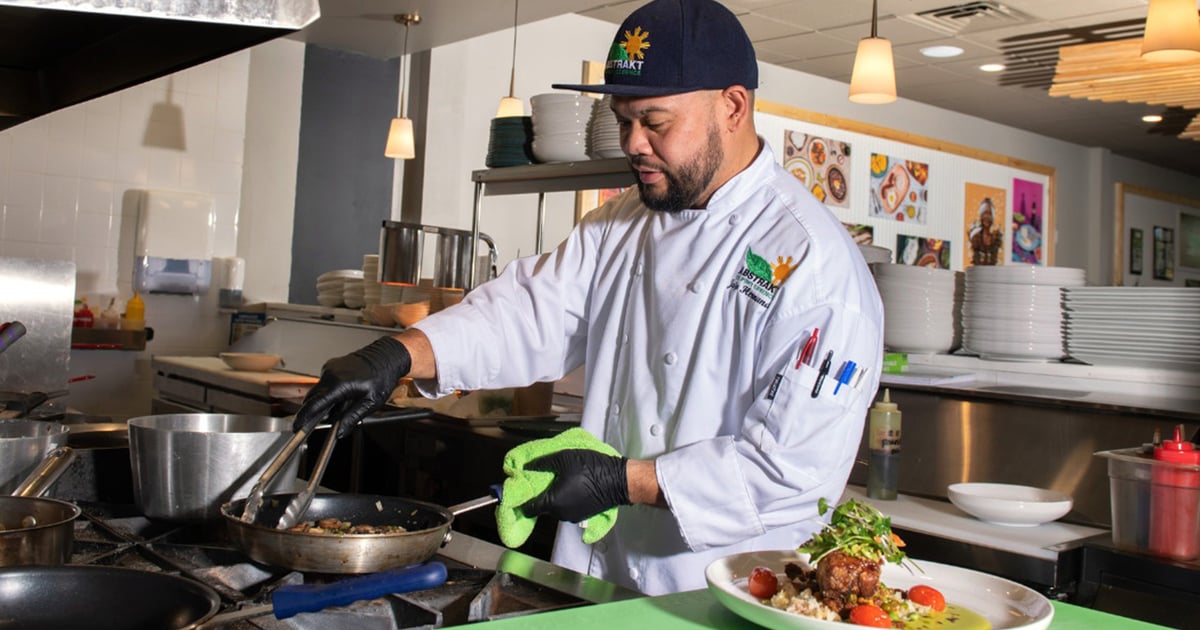
Menu Talk: To introduce his family’s cooking and culture to the community, the chef-owner of Abstrakt Filipino Essence created a pop-up that evolved into a food truck and a brick-and-mortar restaurant.