UpTrajectory Review
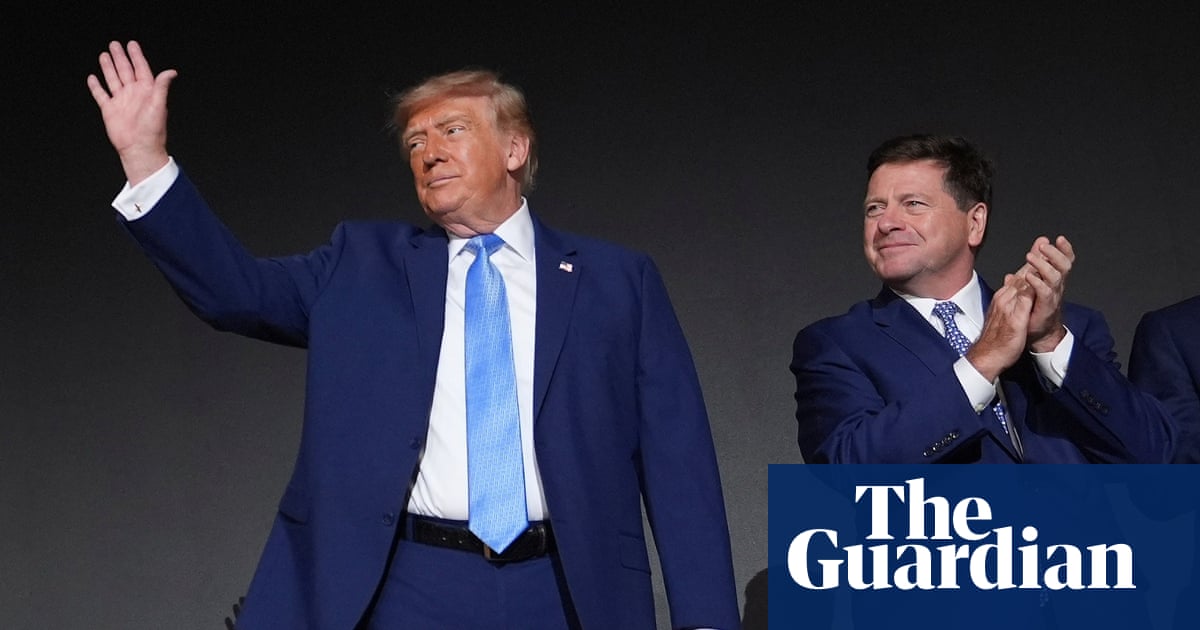
The Guardian reports that Donald Trump has named Jay Clayton, currently the director of national intelligence, to simultaneously serve as the White House AI czar. Clayton is a familiar figure in Republican legal circles: he ran the SEC during Trump's first term, served as the top federal prosecutor in Manhattan, and now oversees the US's 18 intelligence agencies. The appointment folds AI policy into the national security apparatus rather than housing it in a standalone tech or economic role, which is itself a signal about how this administration intends to frame the technology.
For a small-business operator, the identity of the AI czar matters less than the posture. Clayton's own framing at his confirmation hearing, calling AI both a gamechanger and a threat, suggests a regulatory instinct that leans toward managing downside risk rather than accelerating adoption. That has practical consequences: if AI governance is run out of the intelligence community, expect emphasis on security reviews, foreign-model scrutiny, and data-handling rules that could complicate how small firms use offshore AI tools or handle customer data through third-party models.
What is genuinely new here is the dual-hatting. Giving the DNI the AI portfolio concentrates enormous leverage in one office: the person who briefs the president on threats also shapes the policy response to the technology generating many of those threats. We are skeptical this produces coherent, public-facing AI policy. Intelligence culture defaults to classification and caution, which is poorly suited to the open, fast-moving commercial AI ecosystem most businesses actually operate in.
The second-order effects cut unevenly. Large AI labs with government contracts and security clearances will find a friendly, familiar interlocutor in Clayton. Small businesses, by contrast, may face compliance expectations written for defense contractors, not a 12-person firm using off-the-shelf AI for customer service. There is also a workforce angle: if AI policy is filtered through a threat lens, expect federal guidance to emphasize job displacement and misuse more than productivity gains, which shapes what training and grant programs actually materialize.
Watch two things in the coming months. First, whether the AI czar role produces any concrete guidance on procurement, liability, or data standards that small firms can actually use, or whether it stays at the level of national-security rhetoric. Second, whether Clayton's SEC background resurfaces in the form of disclosure or enforcement expectations around AI claims, something public companies already face and private firms may feel through their supply chains. Operators should inventory where AI already touches their customer data now, before any new rules force the issue.
“Clayton had said AI was a ‘gamechanger’ but also posed ‘a threat’ during his confirmation hearing” — The Guardian US
Takeaway: Track whether AI guidance from the new czar is written for defense contractors or small businesses, and audit your AI data exposure before rules arrive.
Excerpt from the original — The Guardian US
Clayton had said AI was a ‘gamechanger’ but also posed ‘a threat’ during his confirmation hearingDonald Trump on Sunday named Jay Clayton, the director of national intelligence, to also serve as the new White House AI czar.Clayton, who leads the US’s 18 intelligence agencies, previously served as the top federal prosecutor in Manhattan and led the Securities and Exchange Commission during Trump’s first term. Continue reading…