UpTrajectory Review
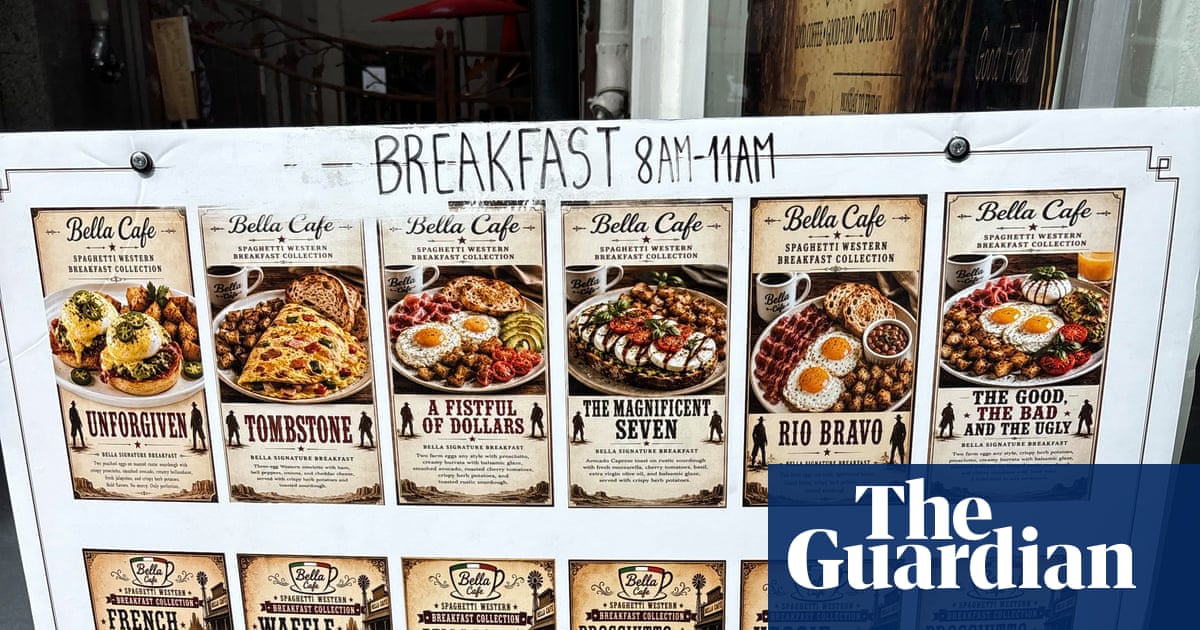
The Guardian's Lisa Bonos documents a growing revolt against AI-generated food photography in restaurants, where synthetic images of dishes are producing results so grotesque they have become social media fodder. The piece opens with a viral example: a Jamaican barbecue pop-up whose AI-rendered meats appeared to one customer as 'leather belts crawling with tiny beetles,' an image that spread to hundreds of thousands of feeds and prompted widespread disgust. This is not an isolated case of one bad prompt. Bonos frames it as an emerging pattern where restaurants, presumably seeking to cut photography costs or quickly populate digital menus, are deploying generative AI tools that fundamentally misunderstand the visual grammar of appetizing food—producing textures that read as reptilian, meats that appear preserved rather than prepared, and an overall uncanny quality that triggers revulsion rather than hunger.
For small restaurant operators, this story lands with particular force because it exposes a dangerous asymmetry in digital marketing economics. The temptation to use AI imagery is obvious: professional food photography runs hundreds to thousands of dollars per session, while AI image generators cost pennies or nothing. Yet the piece suggests the savings are illusory. A single viral post mocking your menu can inflict reputational damage that no amount of saved photography budget can repair. For independent operators without corporate PR departments, this risk is asymmetrically severe—a chain might absorb mockery; a pop-up or single-location restaurant may not recover. The Denver nurse's 26,000 followers and the 500-plus reshares represent exactly the kind of organic, community-scale amplification that can make or break a local food business.
What Bonos captures that many technology trend pieces miss is the specifically bodily nature of the backlash. The nurse interviewed emphasizes that eating is 'such an essential human experience,' and the disgust responses described—leathery textures, insectile details, reptilian skin—are not mere aesthetic preferences but evolved biological warnings. This matters because it suggests the problem is not fixable through better prompting alone. Generative AI currently struggles with the subtle indicators of freshness, moisture, and proper cooking that human photographers and food stylists manipulate instinctively: the particular sheen of rendered fat, the slight irregularity of hand-cut vegetables, the steam that signals temperature. These are not incidental details but core signals of safety and desirability. The technology may improve, but the article implies we are not near the threshold where synthetic food imagery reliably triggers appropriate appetitive responses.
The piece also hints at a class and scale divide worth examining more closely. The restaurant named is a pop-up, precisely the kind of under-resourced operation most likely to seek cheap solutions, yet also the most dependent on visual authenticity and word-of-mouth credibility. Larger chains with dedicated marketing budgets can afford professional photography and have more to lose from brand-damaging AI experiments. This creates a perverse dynamic where the smallest operators face the strongest incentives to adopt risky cost-cutting measures and the least capacity to survive the consequences. Bonos does not explore whether delivery platforms like DoorDash or Uber Eats bear any responsibility for normalizing generic or synthetic imagery in their interfaces, but this seems a relevant pressure point the original likely develops further.
What operators should watch is whether this backlash coalesces into a recognizable consumer preference—something like the 'no AI' labeling already emerging in other creative fields. The viral nature of the Denver example suggests audiences are actively policing authenticity in food representation, and early movers who emphasize genuine photography may capture competitive advantage. The practical response is straightforward but not free: invest in actual photography, or if budget is genuinely constrained, use text descriptions and let customers' imaginations do the work rather than supplying synthetic horrors. The piece's headline promises alternatives, and the full article likely details specific approaches—perhaps user-generated content, simplified graphic design, or partnerships with local photographers seeking portfolio work. Operators should read through for those specifics rather than treating the headline's promise as satisfied by the excerpt alone.
The deeper question the piece raises but cannot answer is what this episode reveals about AI deployment in customer-facing small business contexts more broadly. Food imagery may be an unusually unforgiving test case because of its direct connection to disgust responses, but similar credibility gaps likely exist in AI-generated product descriptions, synthetic customer service voices, or automated social media presence. The lesson generalizes: when the technology's failures are not merely unconvincing but actively repulsive, the cost of experimentation rises dramatically. Small businesses lack the margin for such errors. The operators who thrive in the near term may be those who treat AI as a back-office efficiency tool while keeping human judgment and human production at every customer touchpoint where trust and sensory appeal matter.
Takeaway: Never let AI generate customer-facing food imagery; the reputational risk from visceral disgust far exceeds any photography cost savings.
Excerpt from the original — The Guardian US
Consumers are increasingly encountering AI-generated images on food menus such as leathery meat and bread resembling reptile skinDuring a recent lunch break, Jill Sennett saw something so unappetizing she had to share it with her 26,000 X followers: Artificial intelligence-generated menu images from a Jamaican barbecue pop-up restaurant in which the meats looked like leather belts crawling with tiny beetles.The images were reshared by more than 500 people who similarly expressed their disgust. Eating is “such an essential human experience”, said Sennett, a 37-year-old nurse in Denver. “I think it’s a bad cultural thing that restaurants are converting to these horrific, uncanny food images that are unappetizing.” Continue reading…